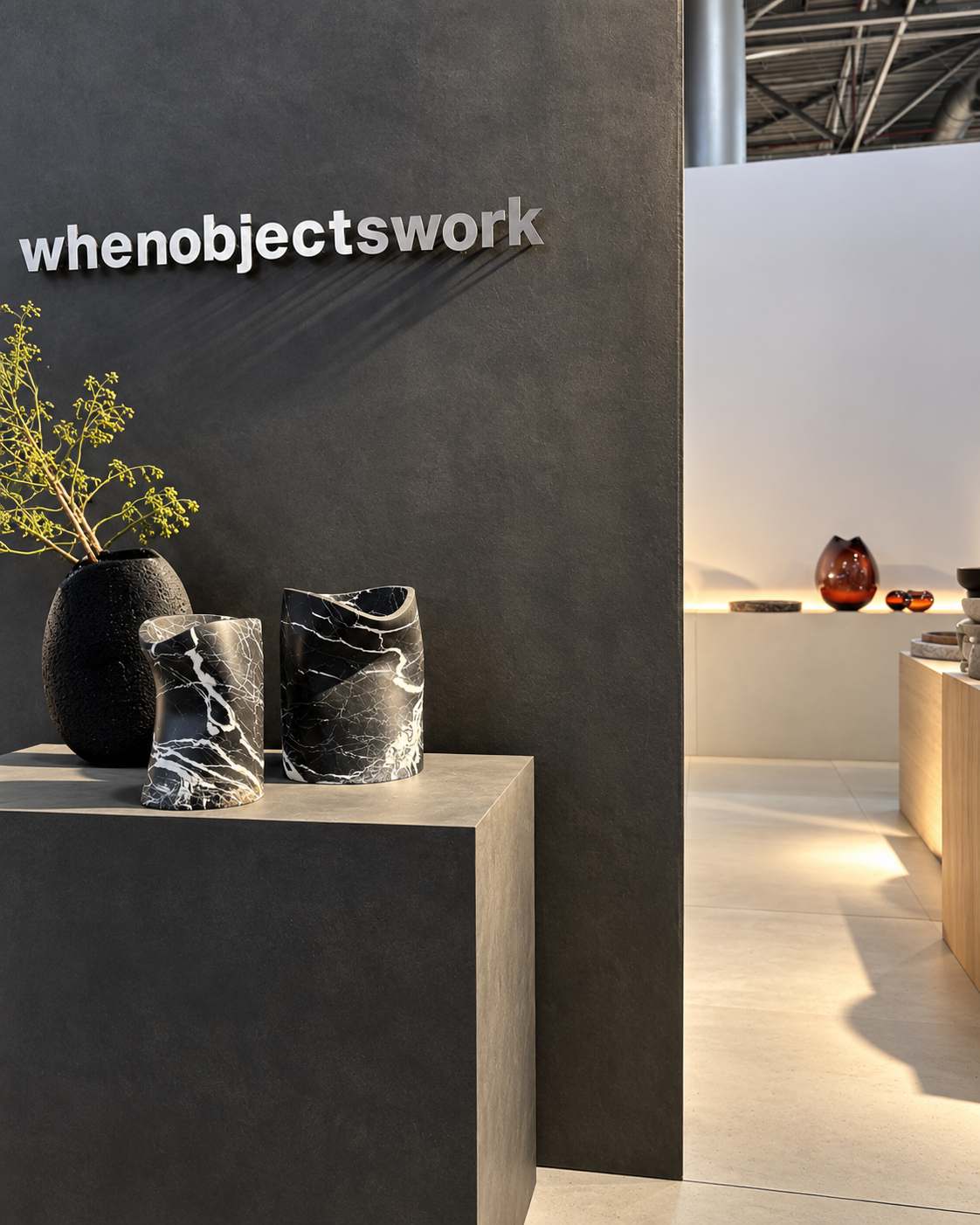

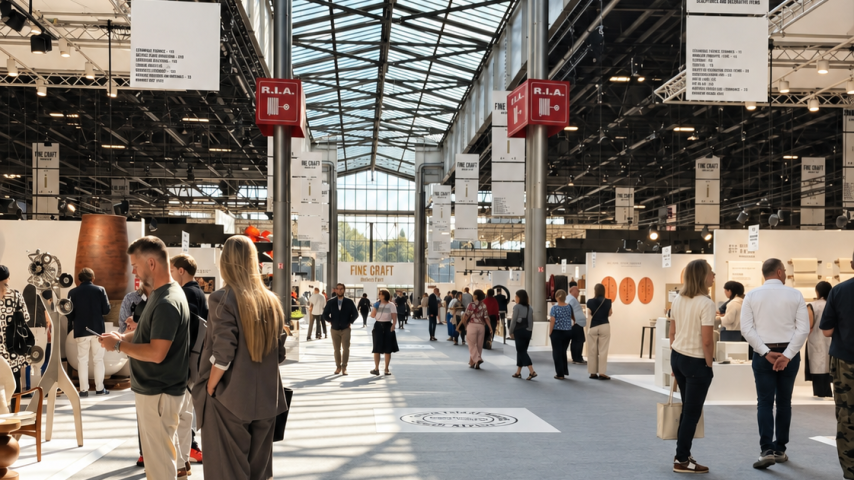
At Maison&Objet Paris, surrounded by 1,700 brands and an almost endless stream of new products, some of the most memorable discoveries were not simply objects. They were the people, ideas and stories behind them. For the September 2026 edition, Veronica Gautschi, design specialist and brand strategist, visited Maison&Objet in Paris, exploring the fair and meeting the founders behind some of its most interesting concepts. Her observations from the show offered a closer look at what stood out in an environment where capturing attention is increasingly difficult.
Maison&Objet is an exercise in curiosity. There is design everywhere: new materials, fragrances, furniture, objects, beauty, craftsmanship and hundreds of interpretations of how we might live tomorrow. Held under the theme Pulse in Motion, the September edition brought together 1,700 brands from 49 countries across seven sectors. Its central narrative was one of movement: design as bold, sensitive and sustainable, responding to changing lifestyles.
But amid such abundance, another question emerged: what actually makes us stop?
During her visit to Maison&Objet, Veronica Gautschi met designers and founders, discovered new materials and concepts, and experienced first-hand the ideas shaping this year’s fair. Beyond the scale of the event, it was these personal encounters and the stories behind the products that left the strongest impression. Four meetings in particular became the highlights of her time in Paris.
LOUCIL: When Fragrance Becomes Functional
One was with Alexander de Marez and Simon Van Cauwenberge, co-founder of Belgian fragrance brand LOUCIL. A bioengineer with a background in fragrance development, Van Cauwenberge researches how scent influences the brain. LOUCIL was created around an intriguing proposition: what if fragrance could do more than simply smell beautiful?
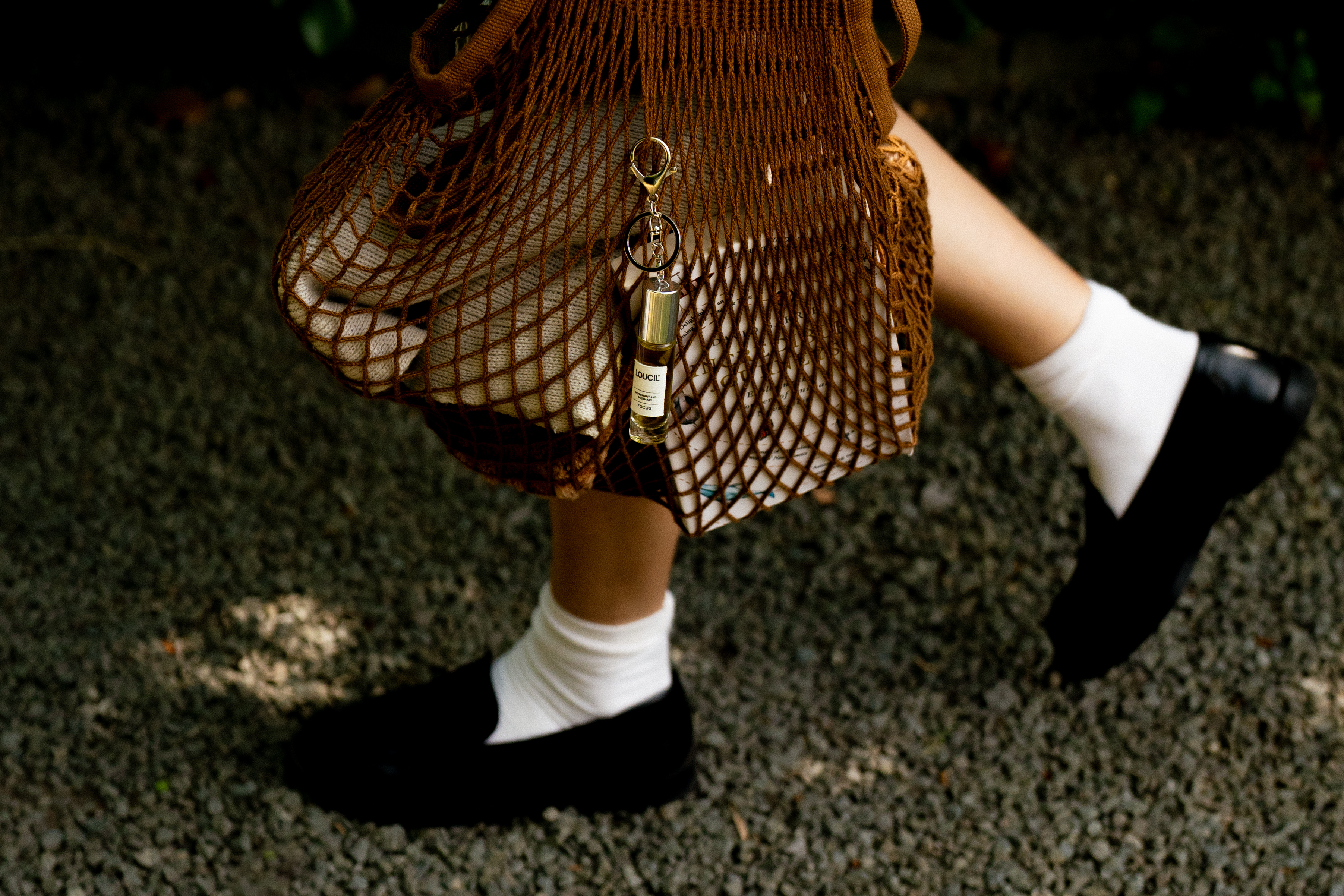
The brand approaches fragrance as a functional tool designed to support wellbeing, exploring the relationship between scent, emotions and the brain. Its fragrances are conceived around different states, including relaxation, energy and focus.
Of the collection, Focus was a particular standout for Gautschi. Beyond the fragrance itself, it was the thinking behind it that resonated. We increasingly expect the products around us to contribute something to the way we live and feel. Beauty alone is no longer necessarily enough; function, ritual and wellbeing are becoming part of the equation.
Dook: When You Can Feel the Founder Behind the Brand
The encounter with Helen Atherton, founder of Edinburgh-based skincare company Dook, offered a different perspective. Dook creates salt soaps and skincare in small batches in Scotland, with its soaps individually poured by hand in a workshop by the sea. The brand works with natural ingredients and has built its identity around considered production, reduced environmental impact and transforming an everyday ritual into something more meaningful.
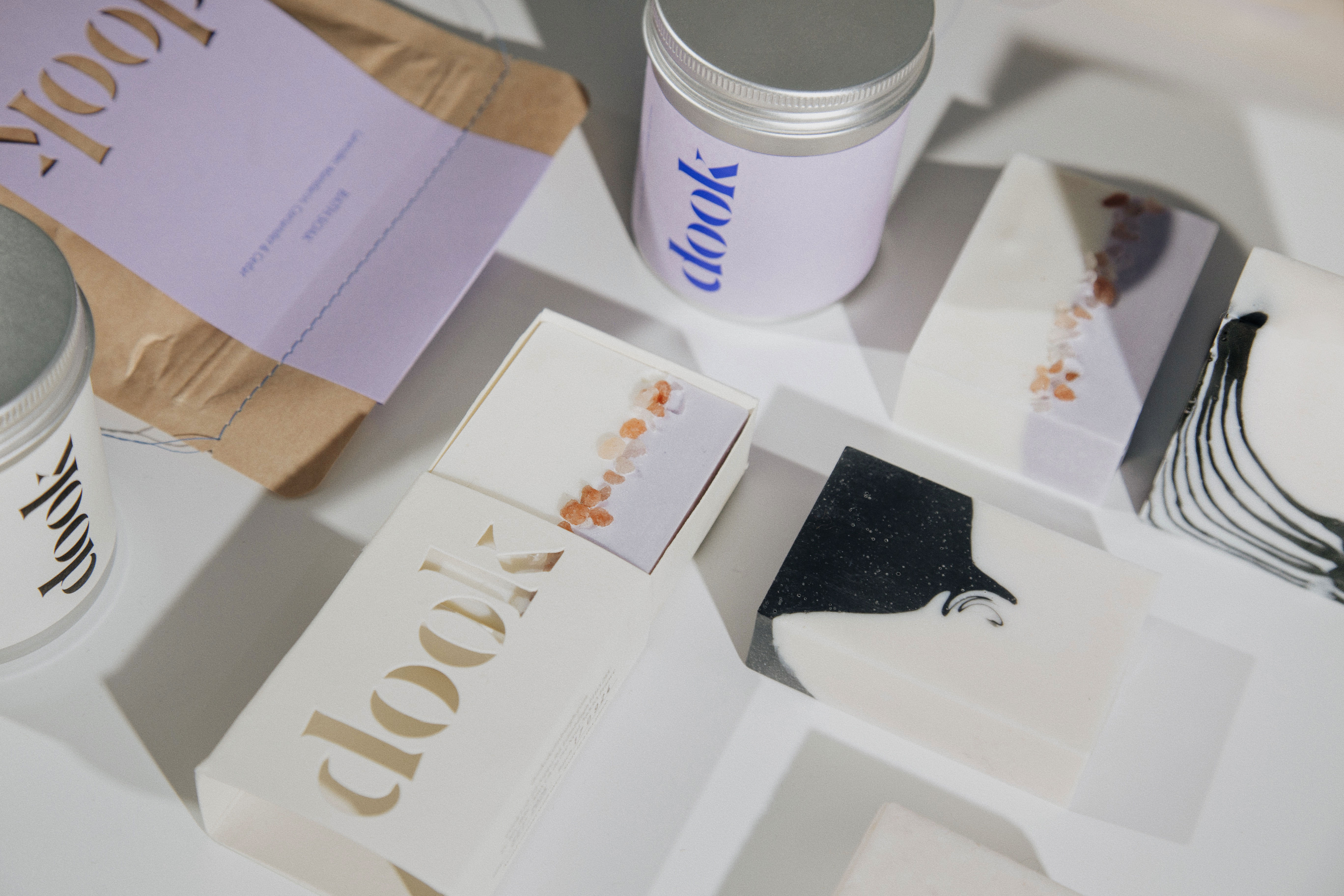
But what caught attention was not simply the product. It was the passion behind it. There is something powerful about meeting a founder with an authentic connection to what they create. Atherton’s enthusiasm opened the door to a wider conversation about the products, their textures, ingredients and the universe surrounding them.
In an industry where branding can sometimes become louder than substance, there was something refreshing about encountering a brand whose story felt genuinely lived.
Instead: What If Waste Became the Beginning of Design?
One of the fair’s biggest surprises came from two worlds that would not usually be associated with one another: beer and furniture. Christophe Pilcher, co-founder, and Franck Grossel, designer, cabinetmaker and co-founder of French company Instead, bring them together. Instead transforms drêches — the spent grains left over from beer brewing — together with currently non-recyclable bio-based food packaging into Balt®, a 100% recycled and 100% bio-based material used to create furniture in France.
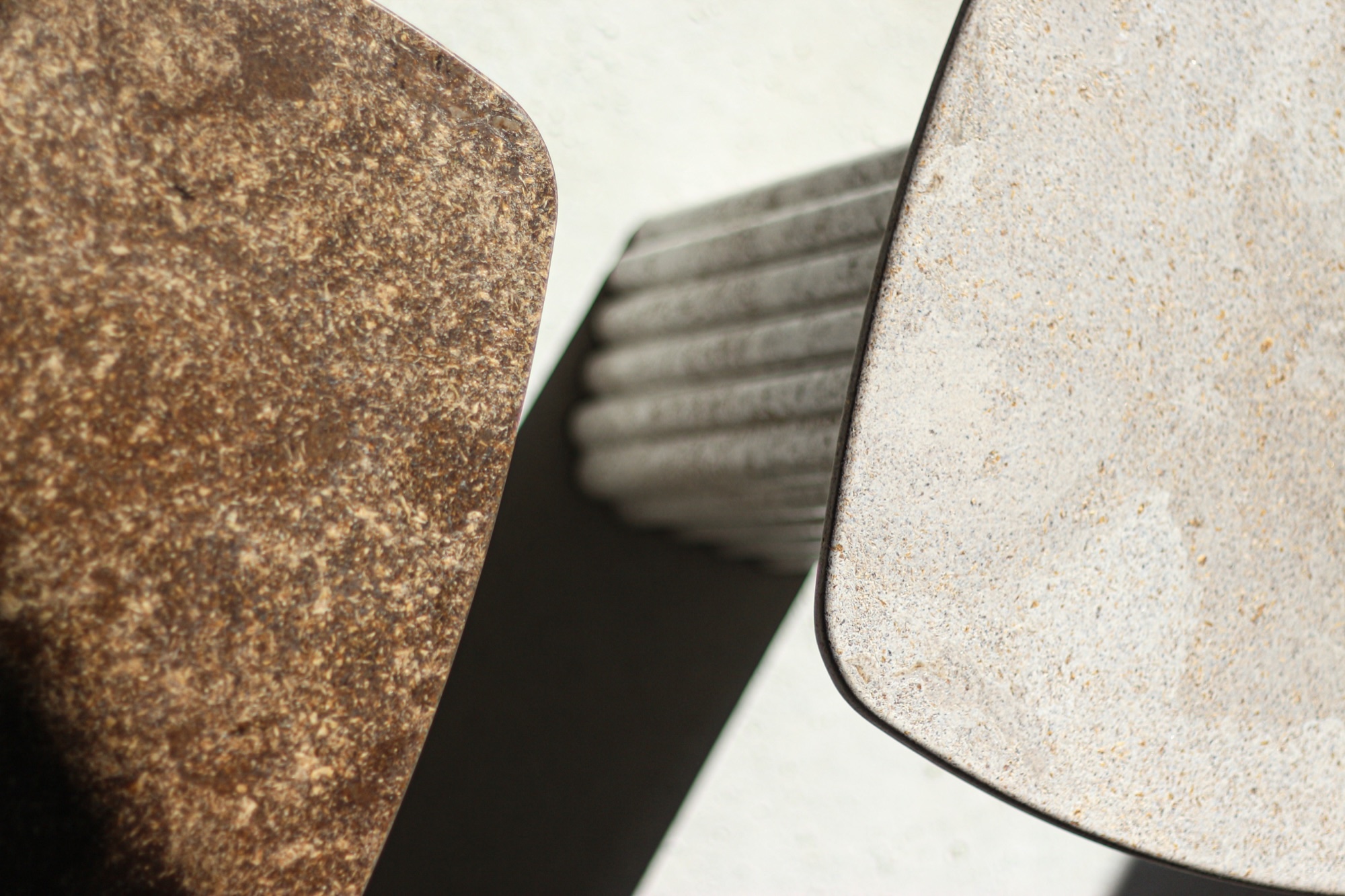
The idea began when Grossel, then a design student, started questioning what happened to the material left behind by beer production. That question eventually became a business built around giving an existing waste stream an entirely different purpose.
What makes the concept compelling is that sustainability is not an addition to the product’s story; it is the reason the product exists. Waste becomes material, material becomes design, and an environmental constraint becomes a source of creativity.
Ilex Studio: The Object You Want to Take Home
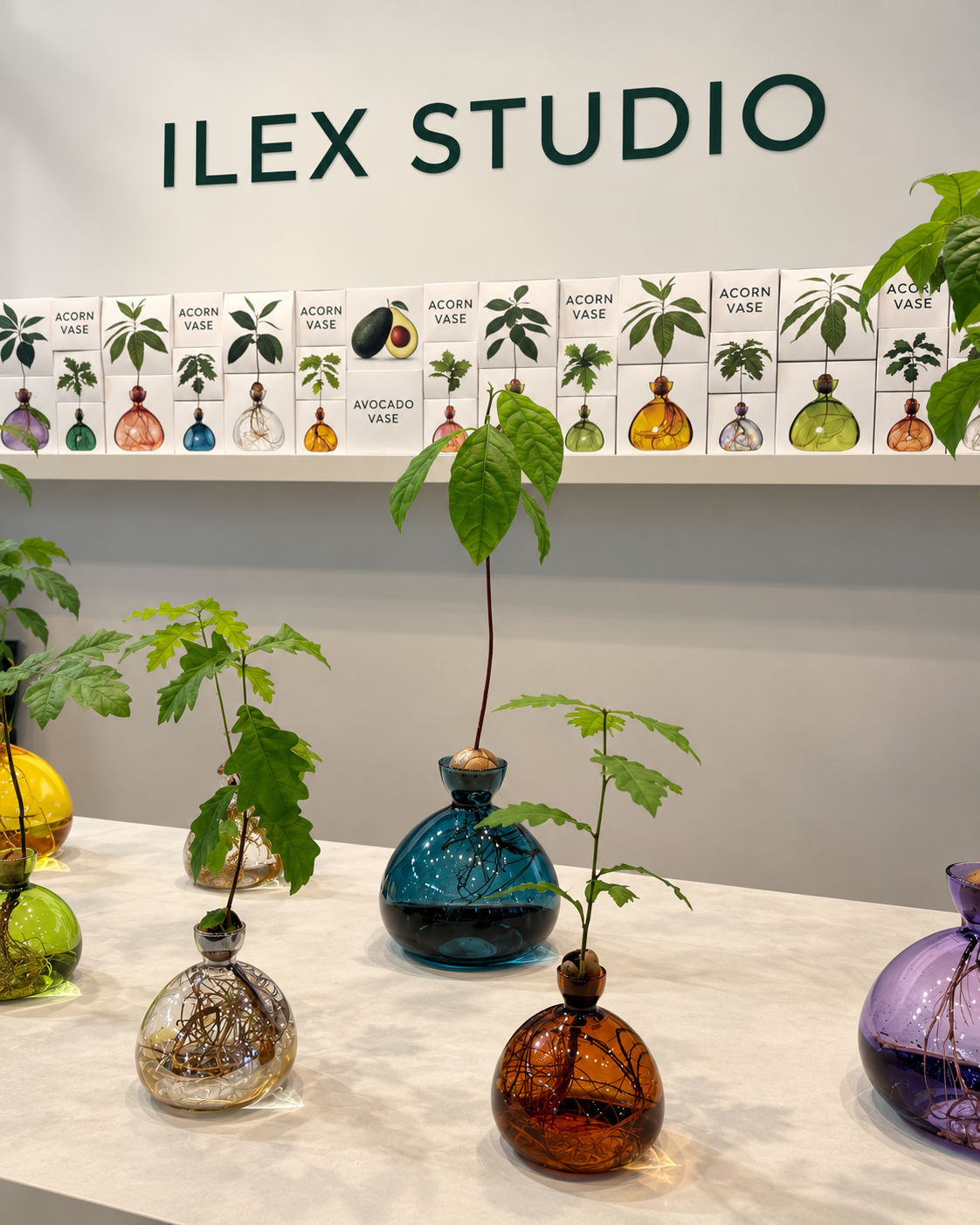
And finally, there was the discovery that prompted perhaps the most instinctive reaction of all: I want it.
London-based Ilex Studio was founded in 2018 by Ed Spurr and Amy Hall Browne around a beautifully simple idea: minimalist glass vessels that allow people to watch a tree grow from seed.
The concept grew from Spurr’s fascination with botanical drawings by artist Ellsworth Kelly and his appreciation of the beauty found in isolating a single branch or plant form. The result is a collection of carefully designed borosilicate-glass vessels that makes the growing process part of the object itself.
It is an almost mono-product universe, and that is part of its strength.
There is no need for excess when an idea is this clear. The design is beautiful, but the story gives it another dimension. It is not simply an object placed in a home; it is something living that changes slowly in front of you.
What Stayed After Maison&Objet
Despite being completely different, they share something important: each begins with an idea rather than decoration alone.
A fragrance conceived around cognitive wellbeing. A salt soap shaped by craftsmanship. Furniture born from brewing waste. A glass vessel that invites its owner to grow a tree.
The encounters also reveal something about the products that manage to stand out in an increasingly crowded design landscape. Behind them is often a founder capable of making us look at something familiar differently. Fragrance becomes function. Waste becomes material. Skincare becomes ritual. An acorn becomes design.
At a fair filled with thousands of objects, these were the stories that travelled back from Paris into our editorial conversation.
Perhaps that is one of the best measures of good design: not simply what makes us stop and look, but what we are still thinking about after we have walked away.