

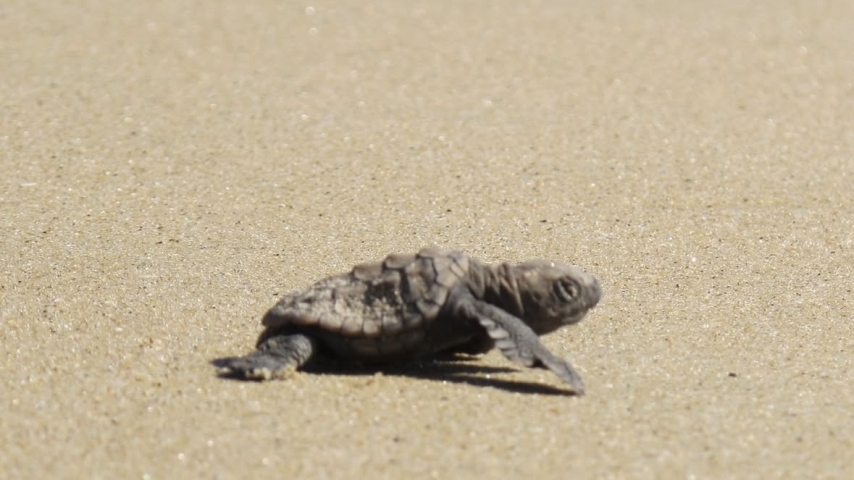
On the remote beaches of São Tomé, an island nation off the coast of Central Africa, a grassroots conservation program is blending science, education and local involvement to protect endangered sea turtles. Supported by the Prince Albert II of Monaco Foundation since 2024, the initiative works alongside Programa Tatô, an international nongovernmental organization based on the island, to conserve sea turtles while sustainably managing marine and coastal ecosystems through an integrated community approach.
The program spotlights the island's role as a biodiversity hotspot, home to five of the world's seven sea turtle species: the green turtle (Chelonia mydas), olive ridley turtle (Lepidochelys olivacea), hawksbill turtle (Eretmochelys imbricata), leatherback turtle (Dermochelys coriacea) and loggerhead turtle (Caretta caretta). All are classified as endangered or critically endangered by the International Union for Conservation of Nature, facing threats from poaching for meat and eggs, shell-based crafts, bycatch in fisheries, pollution, coastal urbanization, erosion, illegal sand mining and unregulated tourism.
At the helm is Betânia Ferreira-Airaud, director and co-founder of the Associação Programa Tatô. In an interview featured in the foundation's #IMPACT Magazine, Ms. Ferreira-Airaud described the project's origins: It began in 1998 as an initial survey funded by the Marine Turtle Peace Corps under the ECOFAC program of the European Union. By 2002, it coordinated with the local NGO MARAPA; in 2014, it gained independence; and in 2018, it formalized as the Associação Programa Tatô, earning recognition from local communities, authorities and partners.
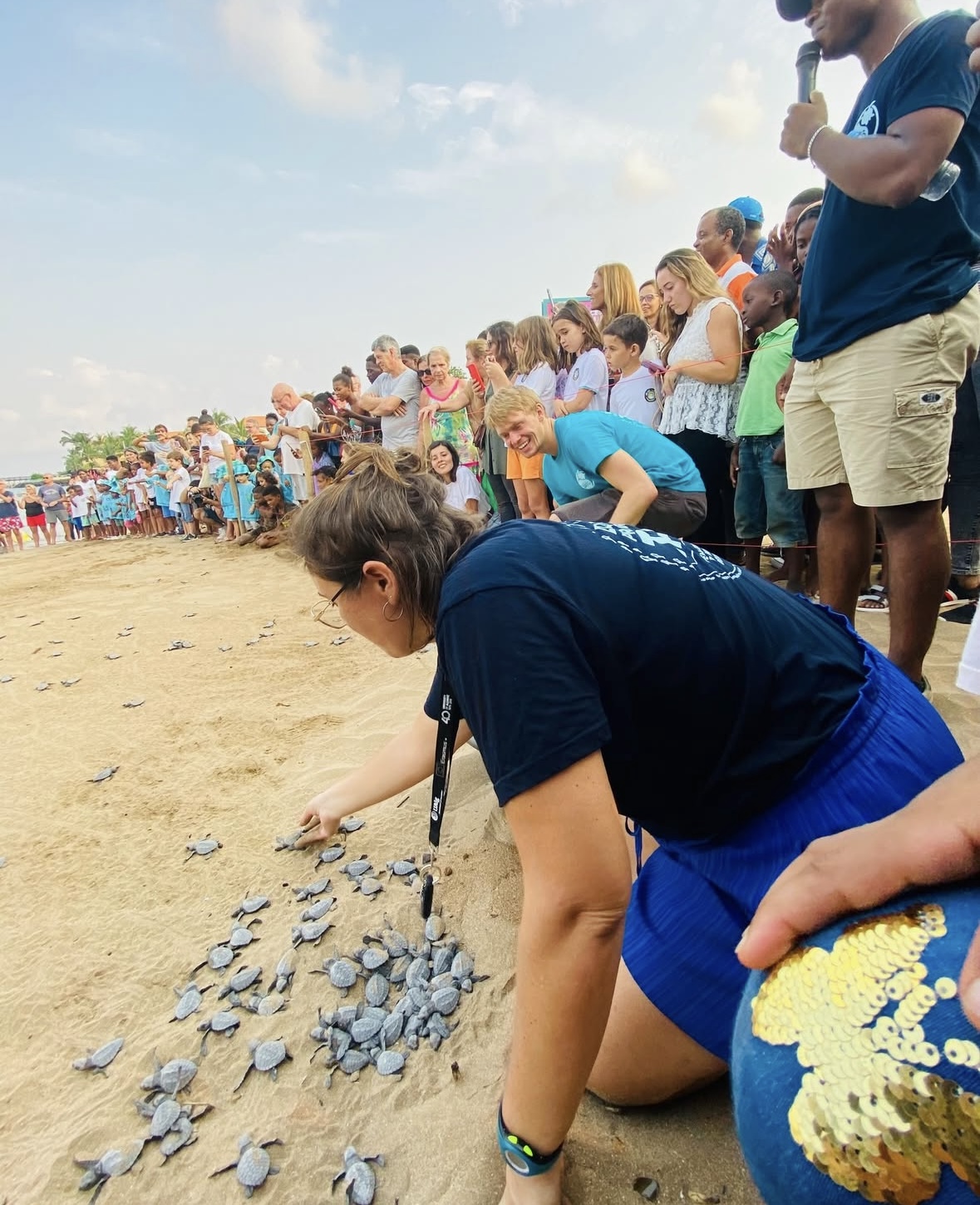
Scientific efforts focus on preserving marine turtles on São Tomé. During the nesting season from September to April or May, teams monitor 30 key beaches with nightly patrols, protecting nests and studying population dynamics. Researchers tag nesting females, conduct genetic analyses to determine population structure and connectivity with other regions, and collect data on juvenile and sub-adult turtles to examine habitats, preferences, health and exposure to contaminants. The work also includes safely releasing captured turtles while gathering valuable data, assessing the program's impact on conservation and community livelihoods.
Social and educational components are integral. The program employs 61 people, mostly from coastal communities, and has trained more than 50 former sea turtle poachers, who have transitioned to conservation roles. It has educated more than 82,700 adults and 1,800 children on the importance of protecting sea turtles and responsible behavior around them. Monitoring extends to 25 kilometers of beaches daily during the nesting season, primarily on the east and south of the island, and 50 kilometers weekly from November to February for a national census of the least-visited beaches. The 90 main sea turtle nesting beaches are monitored and protected by community agents.
Results are tangible: 94 accidentally captured turtles have been released thanks to the program. As Ms. Ferreira-Airaud noted, "Our work embraces an integrated approach, connecting science, conservation and sustainable community development."
This effort underscores how local knowledge and science can unite to safeguard vulnerable species in one of Africa's most exceptional marine wildlife areas.
Photo credits: Dario Paraiso