

In February 1912, the Opéra de Monte-Carlo premiered Roma, a five-act opéra tragique by Jules Massenet. It would be the final stage work mounted during the composer’s lifetime. Set in ancient Rome following the devastating Carthaginian victory at Cannae, the drama - adapted by Henri Cain from Dominique-Alexandre Parodi’s play Rome vaincue - chronicles the downfall of Fausta, a Vestal Virgin condemned to be buried alive after allowing the sacred flame to extinguish. Despite its initial critical acclaim, Roma slipped into near-total obscurity as the 20th century progressed, eclipsed by Massenet’s earlier masterpieces like Manon and Werther.
On Saturday, September 26, 2026, the Orchestre Philharmonique de Monte-Carlo will revive the rare work in a concert performance at the Auditorium Rainier III on Boulevard Louis II.
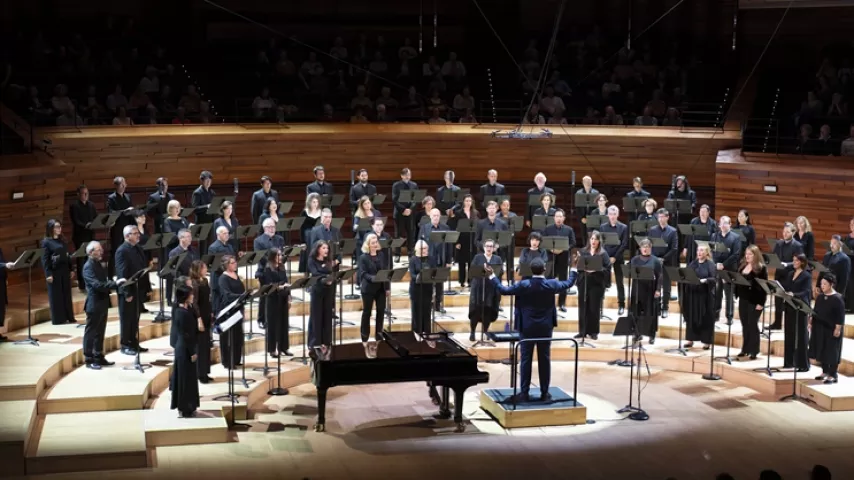
Conducted by Diego Ceretta, the performance features soprano Rachel Willis-Sørensen as Fausta, alongside tenor Jean-François Borras as Lentulus, her legionary lover. Mezzo-soprano Julie Robard-Gendre portrays the blind matriarch Posthumia, who commits a final, desperate act of mercy to save her granddaughter from the Senate's severe decree. Baritone Tassis Christoyannis sings Fabius Maximus, with bass Patrick Bolleire as Lucius Cornélius, the Sovereign Pontiff. The cast is completed by Jérôme Boutillier, Hélène Carpentier, Aliénor Feix, and Clémence Tilquin, joined by the Chœur de Radio France under choir director Lionel Sow.
Scheduled to begin at 4:00 p.m., the concert performance offers a rare opportunity to re-evaluate a piece of late-Romantic French operatic history in the very municipality where its score was first brought to life over a century ago.
Photo credits: Orchestre Philharmonique de Monte-Carlo