

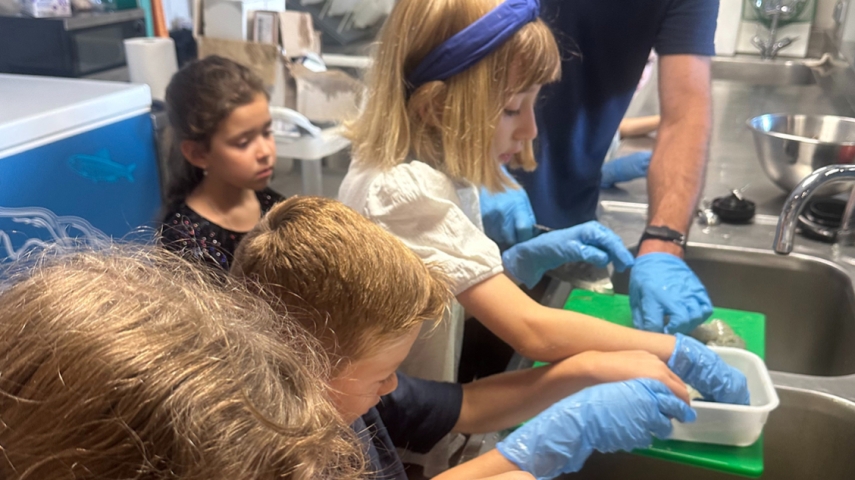
In an era where ecological literacy is increasingly viewed as a fundamental pillar of early education, the Musée Océanographique de Monaco has unveiled its latest initiative: the 2026 Club Oceano. This discovery program, framed as a week-long immersion into the marine world, represents a significant evolution in how scientific institutions engage the next generation of environmental stewards.
The 2026 program introduces four unprecedented themes designed to explore the ocean’s multifaceted nature. Operating from 9:00 a.m. to 5:00 p.m., Monday through Friday, the stage is less a traditional classroom and more a "mini-expedition." Under the guidance of professional science educators, participants are invited to experiment, create, and engage with the Mediterranean’s complex ecosystems through hands-on scientific manipulation and creative play.
A Structured Exploration
The curriculum for the current season is precisely segmented to ensure depth of study. During the weeks of February 16-20 and February 23-27, students focused on the "Mediterranean Expedition" and the "Heart of Coral Reefs," respectively. These sessions are tailored for two distinct age brackets - 6 to 8 years and 9 to 12 years - ensuring that the scientific delivery remains age-appropriate and impactful.
In a move toward exclusivity and high-quality instruction, the museum has capped enrollment at 12 children per group. This intimacy allows for a focused "explorer" experience, bolstered by the provision of specialized kits. Upon commencement, each child receives an explorer’s pouch containing a "100 Facts" booklet, an identification guide for Mediterranean species, and various tools for documentation, including sketchbooks and coloring kits.
The Logistics of Advocacy
The program, which is scheduled for upcoming sessions from April 13 to April 24, 2026, is situated at the historic Avenue Saint-Martin. Priced at 450€ per child for the week, the tuition is all-inclusive, covering both lunch and afternoon snacks, thereby positioning the museum as a full-day hub for scientific discovery during school holiday periods.
The Musée Océanographique’s Club Oceano serves as a model for how heritage sites can transition into active laboratories for change. By equipping children with both the data and the empathy required to protect marine life, the program suggests that the future of the ocean depends not just on policy, but on the wonder cultivated in the children of today.
Photo credit: Musée océanographique Monaco