

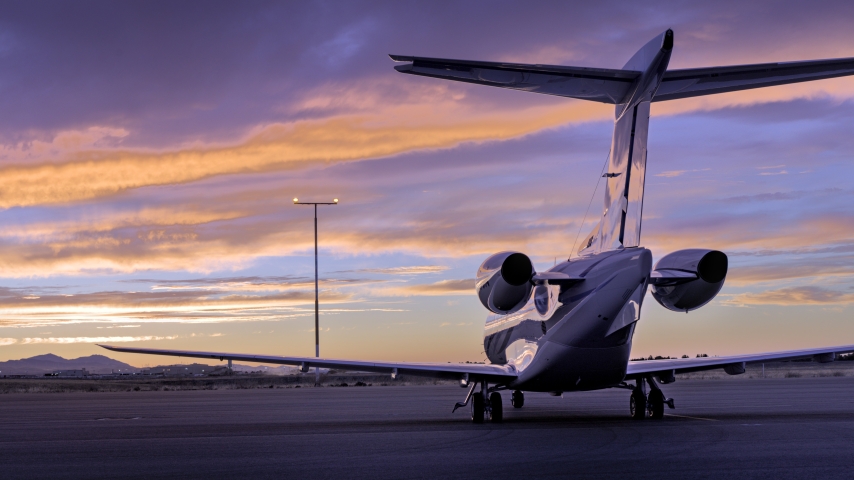
Image by Kim Hunter from Pixabay
The French Riviera is taking a significant step towards cleaner private aviation, with plans underway to prepare its airports for a new generation of hydrogen-powered business jets.
French aircraft developer Beyond Aero has partnered with Aéroports de la Côte d’Azur, operator of Nice Côte d’Azur, Cannes-Mandelieu and Golfe de Saint-Tropez airports, to develop the infrastructure required to refuel hydrogen-electric aircraft. The phased rollout is expected to coincide with the arrival of the first aircraft in the early 2030s.
Business aviation could provide an ideal testing ground for hydrogen flight. While private jets have a particularly high carbon footprint per passenger, their relatively limited traffic volumes make it possible to introduce new fuelling infrastructure gradually before considering deployment on a larger commercial scale.
At the centre of the project is Beyond Aero’s “One”, a six-to-eight-seat business aircraft powered by hydrogen fuel cells. Instead of conventional jet fuel, the system uses hydrogen to generate electricity, with water vapour as the in-flight emission. The Toulouse-based company has already completed a crewed hydrogen-electric flight in France and says it has secured more than $900 million in letters of intent for over 100 aircraft.
The challenge now extends beyond aircraft design. Airports need systems capable of safely sourcing, storing and delivering hydrogen before the first jets enter service.
The Riviera project is focusing initially on compressed gaseous hydrogen using technology already available at industrial scale. Hydrogen could be produced off-site and transported to airports, with both fixed and mobile aircraft-refuelling solutions being considered.
Cannes-Mandelieu, one of the region’s key business aviation hubs, is emerging as the most likely location for the first installation.
By developing aircraft and ground infrastructure in parallel, the partnership aims to make the French Riviera one of the early European regions ready for hydrogen-powered business aviation — and potentially provide a blueprint for airports elsewhere.