
Dentists Redefining The Cosmetic Smile
A TRIP to the dentist was once enough to make anyone break into a cold sweat.
But for patients looking to achieve or maintain a sharper look, such a visit is more about real gain than imagined pain.
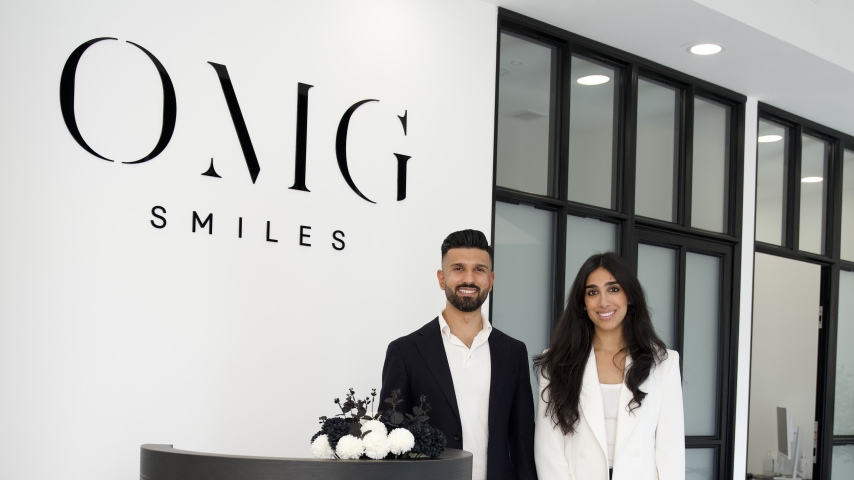
“They now see it as more like a hair appointment, a manicure, or shopping for designer clothes,” says Aamir Vaghela of OMG Smiles in St Albans, England.
Co-founder and younger sister, Natasha, agrees: “Traditional fear of the dentist has largely faded. Most of our generation grew up with positive dental treatment experiences, so they are happy to invest more in their appearance, persuaded by modern culture and social media.
Aamir agrees: “Clothes may be quickly discarded, but a smile is permanent. You eat with it, chew with it, and smile with it – it's a part of you."
Breakthrough technologies like digital imaging of a patient’s mouth and invisible alignment – replacing the old wires and braces – have helped, and the Vaghelas have just retained an Apex Invisalign award, placing them in the top 1% of practices across the UK, Europe, Africa, and the Middle East.
Aamir first gained the award at his previous practice four years ago and the siblings carried it on when they founded OMG Smiles two years later – a single clinic beating many rivals with 10-30 sites.
Having worked across general dentistry after qualifying, Aamir specialised in cosmetic dentistry around six years ago. Then came lockdown and people found themselves with plenty of screen time, and a desire for "the really fake, showy smile," he says, perhaps influenced by shows like The Only Way Is Essex and Love Island.
Fortunately, the tide has since turned toward realism and Aamir adds: "Many people come to us because we like to deliver a really natural look, with a great smile."
His analogy? You can buy a nice off-the-peg suit at M&S or have one custom-made on Savile Row. "They are both effective, yet one is visibly superior. It’s the same with dentistry – you are paying for time and expertise to get a superior look.”
Natasha is critical of advertised ‘48-hour smiles’. A quick fix, she warns, is "still never right." Proper treatment and the desired result typically take a couple of weeks, whereas work squeezed into a single day might attract custom, but the work is prone to fracturing or early failure.
And there is no need to rush, as digital scans and AI simulations now allow patients to see and consider potential results before they sign up.
"It's all about trust," adds Aamir. Sometimes that means telling a patient what they do not want to hear. Problems can arise when people insist on big, ultra-white teeth, often promoted in ads for cut-price ‘new smile’ treatments abroad, colloquially known as ‘Turkey Teeth’.
Natasha and Aamir advise these patients that dramatic styles can look incredibly out of place as a person ages, but sometimes, they must admit defeat and say: "Sorry, but we're not the right dentists for you."
So, what does a new smile cost? Aamir says OMG Smiles’ average order value is just under £4,000, but patients spend anywhere from £500 up to £30,000.
It’s clear that, far from any sibling rivalry, the Vaghelas make a great team, even though the initial call to dentistry came from Natasha, who at 30 is four years younger than Aamir.
“I knew I wanted to be a dentist at eight or nine years old, after undergoing orthodontics that changed my life and boosted my confidence,” she says. Aamir wanted to go into medicine, but Natasha’s enthusiasm for a dental career swayed their parents’ hopes for him too, he grins.
He qualified in 2015, and she followed in 2019. Both attended King’s College, London, rated one of the world’s best dental colleges. When he was ready to establish his own practice, Aamir simply told Natasha: "Just come aboard. I'll mentor you."
They say they never argue and have achieved an amicable 50:50 split on the wider management of the business. Natasha handles personnel and day-to-day operations, while Aamir leads the clinical work and marketing strategies. "Work feels like 24/7,” admits Natasha. “Not in a bad way, but it is all-consuming."
Staff at the St Albans clinic now numbers 20, running three surgeries with room to expand to five. Additional sites have been discussed but Natasha says they currently want to create the ultimate standalone clinic: “It’s so hard to scale up quality across more sites, and we want to avoid spreading ourselves too thin.”
Partly, this is because dental treatment is never entirely risk-free, she adds, and patients appreciate having someone close by to look after them, a care essential that cannot be offered when patients opt for ‘quick fix’ treatments abroad.
Natasha concludes: “Aamir and I aim for the best patient relationships, not just with us as the individual dentists, but with the practice as a whole."
According to the Vaghelas, the patient feedback thoroughly supports this ethos. "One patient told us, 'I'm smiling more, and the world's smiling back,'" says Natasha.
For Aamir, such comments validate his philosophy: “Dentistry is not so much about the teeth, but what comes after the teeth."