

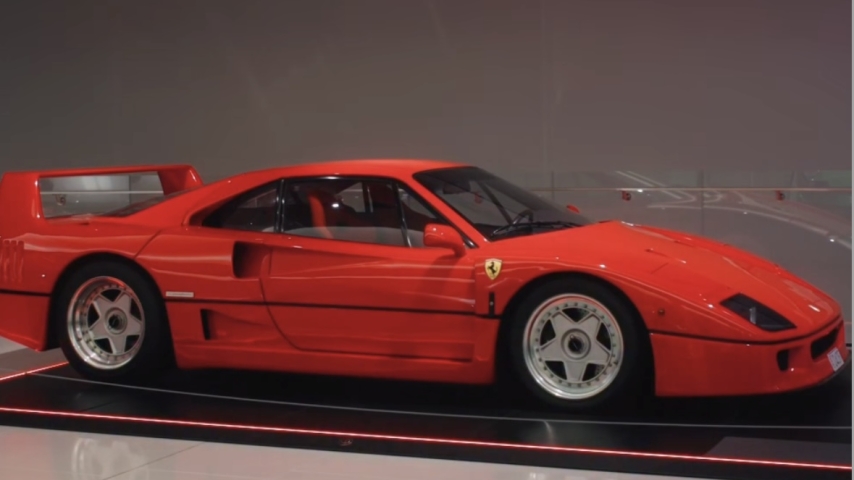
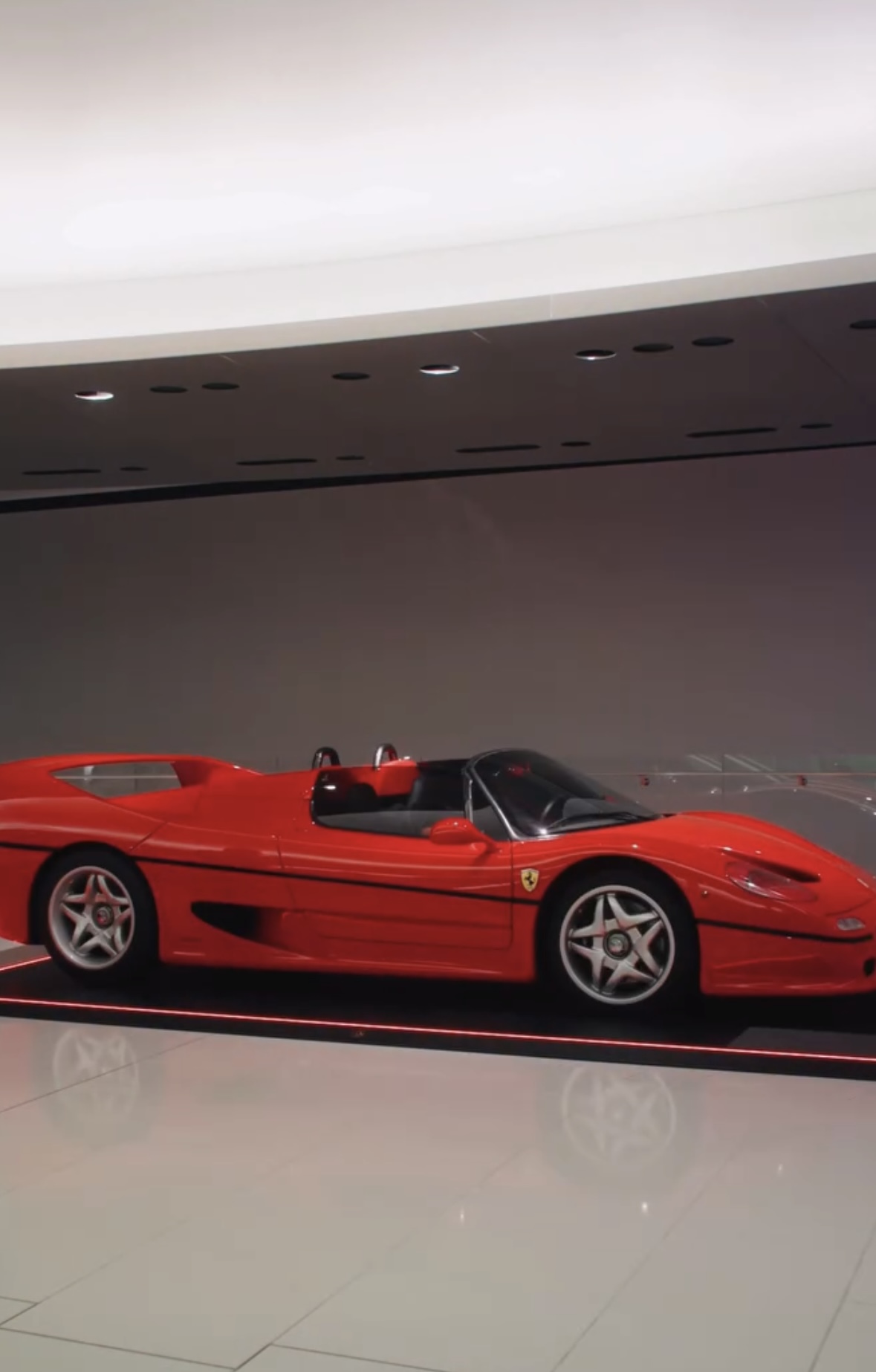
Few automotive duos encapsulate the shift in modern performance engineering as starkly as the Ferrari F40 and its immediate successor, the Ferrari F50. Now showcased side-by-side at the Prince of Monaco’s Car Collection along Port Hercule, these two supercars represent distinct watershed moments in Maranello’s history - bridging the end of the analog era with the dawn of Formula 1 technology adapted for the road.
The F40: Enzo Ferrari’s Final Masterpiece
Unveiled in 1987 to celebrate the automaker’s 40th anniversary, the Ferrari F40 holds a singular place in automotive history as the final model personal approved and developed under the direct supervision of company founder Enzo Ferrari before his death in 1988.
Stripped of driver aids, power steering, and traditional luxury appointments, the F40 was conceived as an uncompromising, lightweight track machine homologated for street use. Built around a twin-turbocharged V8 engine and wrapped in a body crafted from Kevlar, carbon fiber, and aluminum, the F40 prioritized raw power and minimal curb weight. It became the first production road car to surpass the 200 mph threshold, cementing its status as the benchmark supercar of the late 20th century.
The F50: Bringing Grand Prix Technology to the Street
If the F40 was built to distill pure driving passion, the 1995 Ferrari F50 was designed to translate Grand Prix engineering directly onto public roads. Commissioned to mark Ferrari’s 50th anniversary, the F50 departed from turbocharging in favor of a naturally aspirated 4.7-liter V12 engine derived directly from the company’s 1990 Formula 1 entry, the Ferrari 641.
Beyond its high-revving powertrain, the F50 integrated a carbon-fiber tub chassis with the engine and gearbox acting as stress-bearing structural members - a layout borrowed straight from modern top-tier motorsport. The result was a vehicle that bridged the gap between open-wheel competition and road-legal grand touring, establishing a blueprint for Ferrari’s top-tier hypercars in the decades that followed.
A Royal Setting for Automotive History
Housed in the 3,500-square-meter underground exhibition space on Port Hercule, the Princely Collection assembled by Prince Rainier III and expanded by Prince Albert II provides an ideal historic backdrop for the paired display. Positioned steps away from the tarmac of the Circuit de Monaco, the exhibition highlights the continuous thread connecting Maranello’s engineering breakthroughs with the principality’s long-standing motorsport heritage.
Photo Credits: Collection de Voitures de S.A.S. le Prince de Monaco