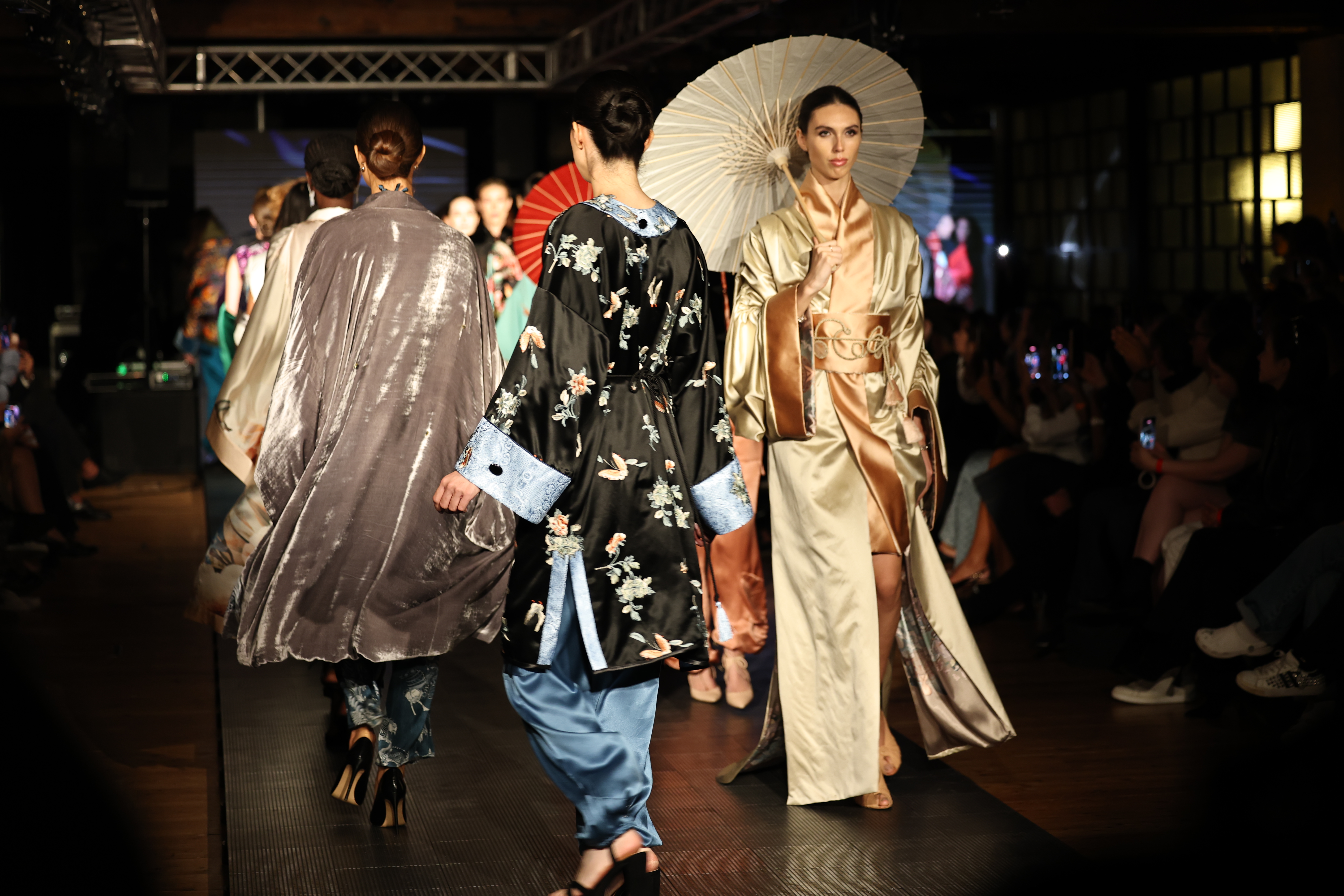

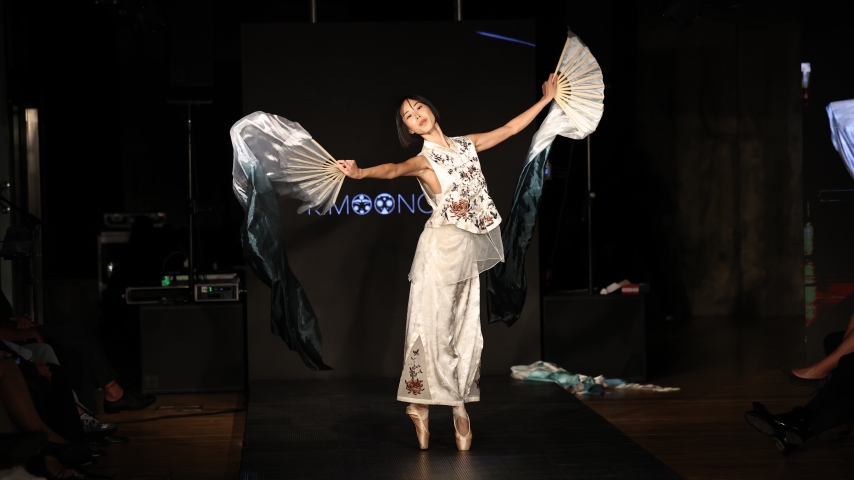
Milan Fashion Week has long been a trendsetter, shaping what the world will be wearing in the seasons ahead. Beyond the major runways and familiar names, each season brings designers hoping to introduce a different point of view. This September, one of those debuts came from KIMOONCHO, which presented its first runway collection at Officine del Volo on 25 September as part of B ICONIC.
The appearance marked the label’s official arrival on the Milan fashion scene, with a collection shaped by an encounter between Eastern dress traditions and contemporary European fashion. A day later, KIMOONCHO had another reason to celebrate: the brand was recognised as the No. 1 participating brand across B ICONIC’s two-day event on 25 and 26 September. For a first runway appearance, it was a notable introduction.
East, Reconsidered
The kimono is at the heart of KIMOONCHO, but the collection does not treat it as something fixed in the past. Instead, its proportions, movement and decorative language provide a starting point.
Silk falls into long, fluid silhouettes. Embroidery inspired by Asian decorative traditions appears against black and jewel tones. Satin catches the light, while velvet introduces a heavier, more sensual texture. Alongside kimono-inspired pieces are evening dresses, tailored separates, outerwear and contemporary interpretations of the qipao.
One black silk kimono brings several of these elements together, combining contrasting satin details with intricate gold embroidery. Elsewhere, emerald, deep red and champagne soften or intensify the collection depending on the fabric and cut.
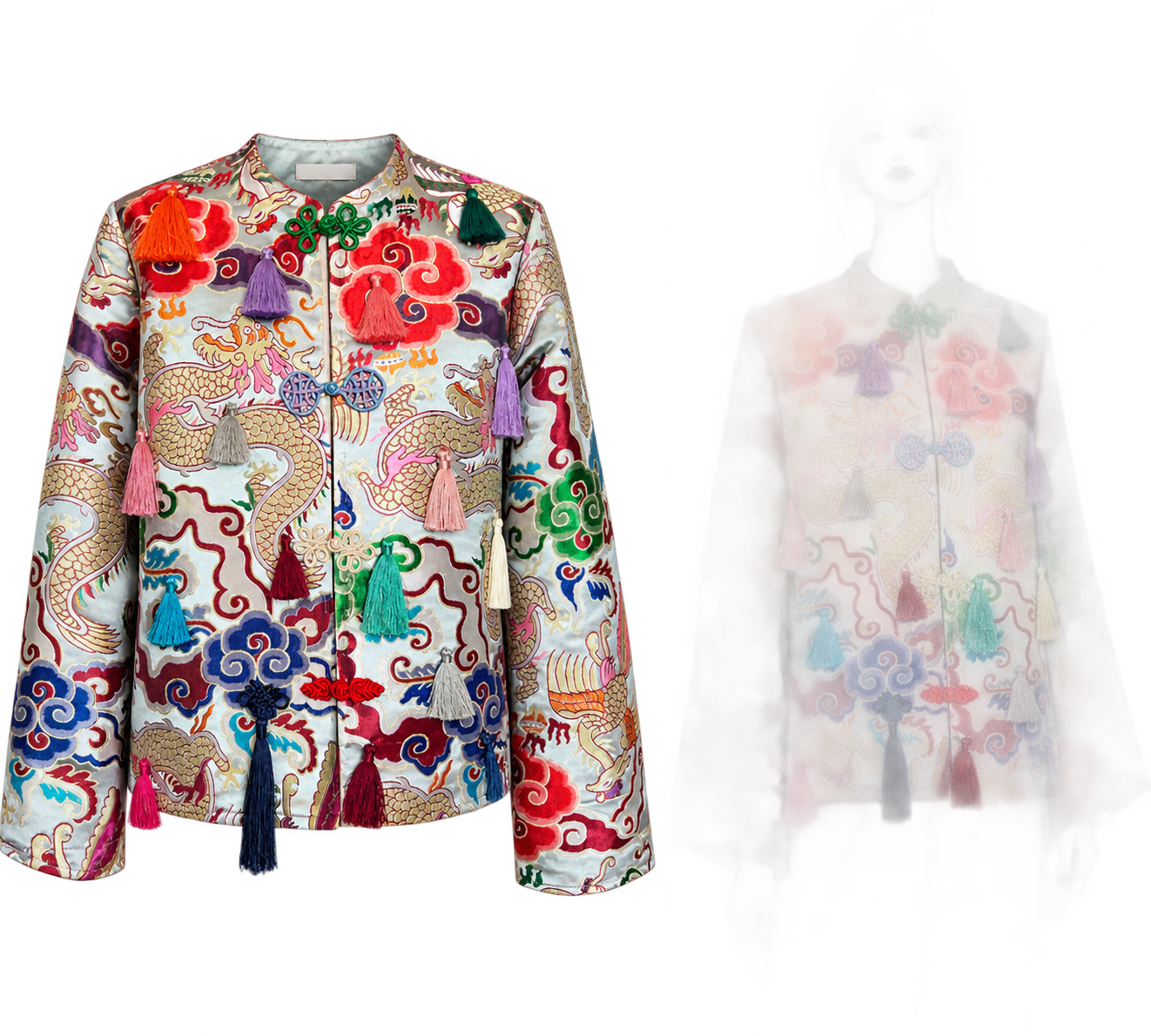
The references to Japan and China are visible, but the intention is not to recreate historical dress. KIMOONCHO uses them as design elements, changing proportions and construction to create clothes intended for a contemporary wardrobe.
Made to Stand Apart
There is also a deliberate distance from mass production. Many pieces are created in very limited numbers, with some produced as one-offs. That approach suits the personality KIMOONCHO is building around its clothes. These are not pieces designed to disappear quietly into a wardrobe. Long lines, rich fabrics and embroidery give them presence, while the limited production makes individuality part of their appeal.
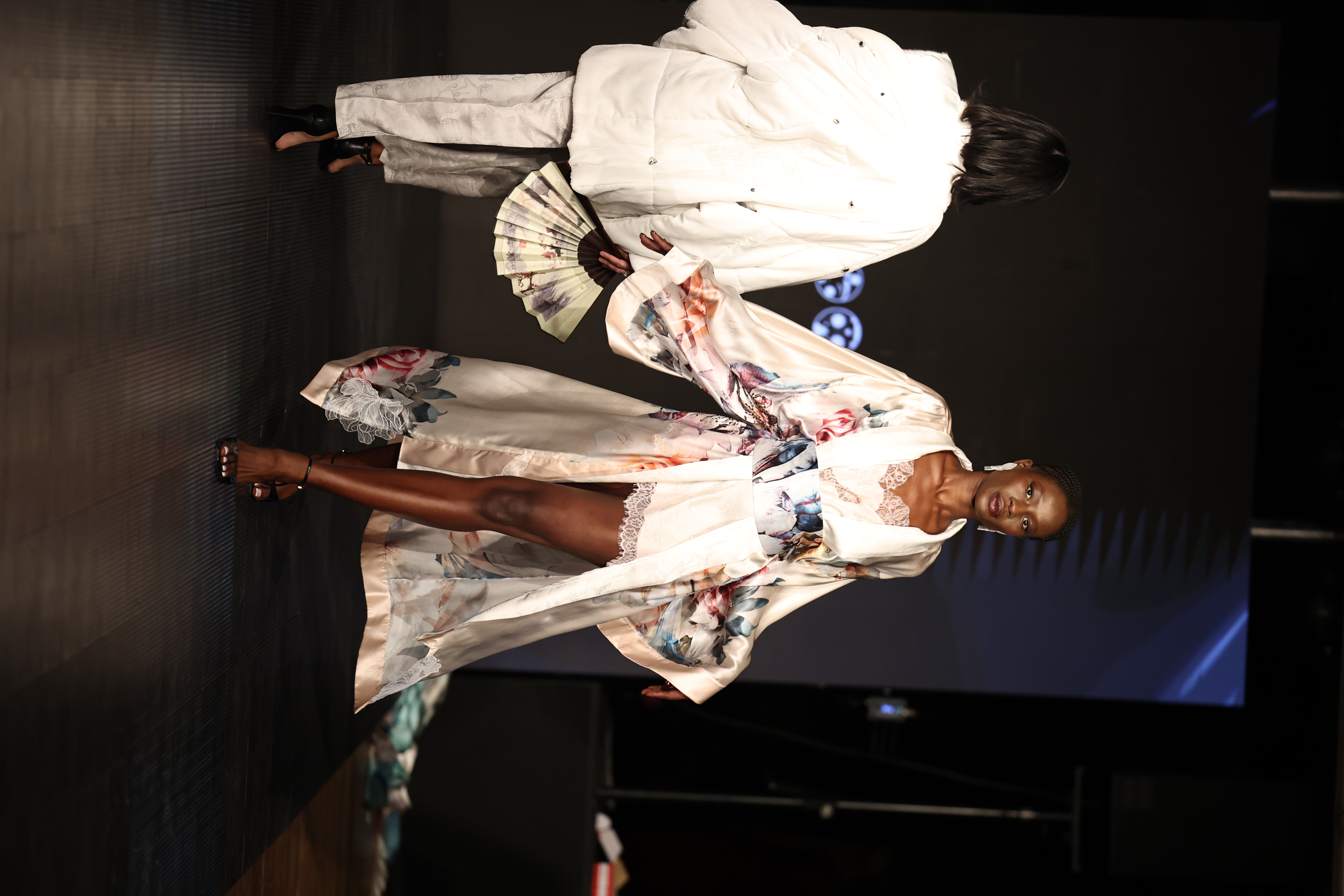
The brand does not define its woman by age or nationality. The common thread is confidence: someone drawn to clothes with character rather than simply to whatever happens to be in fashion that season. Menswear also forms part of this wider idea, allowing the label to move beyond a single silhouette or category.
An Italian Connection
If the visual references look east, an important part of KIMOONCHO’s story is firmly Italian. The collection works with silk, satin, velvet and carefully selected textiles, with particular importance placed on the relationship with Como and its long-established textile tradition. It is here that the brand’s cross-cultural approach becomes more tangible: Asian-inspired forms and decorative elements interpreted through materials and craftsmanship closely associated with Italian fashion.
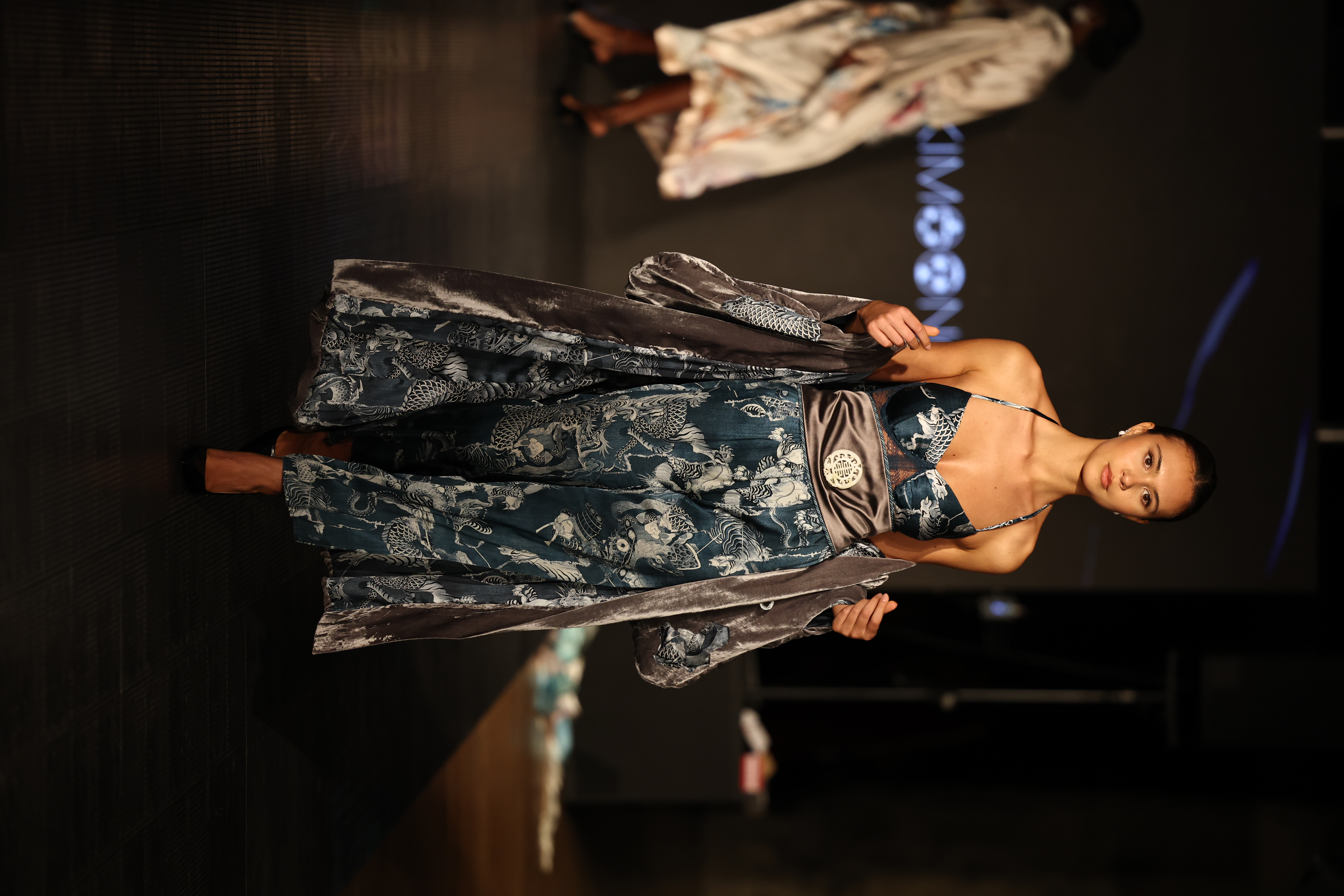
This is perhaps where the idea behind KIMOONCHO is most convincing. “East meets West” can easily become a fashion slogan; here, the aim is to express it through fabric, construction and the way a garment moves.
A Milan Debut
Officine del Volo provided an industrial Milanese backdrop for the label’s first runway presentation. Through B ICONIC, the collection was introduced to an audience of fashion professionals, buyers, media and creatives during one of the busiest weeks on the international fashion calendar.
KIMOONCHO was subsequently named the No. 1 brand among those participating in the two-day B ICONIC programme. The recognition gave the young label an encouraging result from its first Milan presentation, but the collection itself offered a clearer indication of where it wants to go.
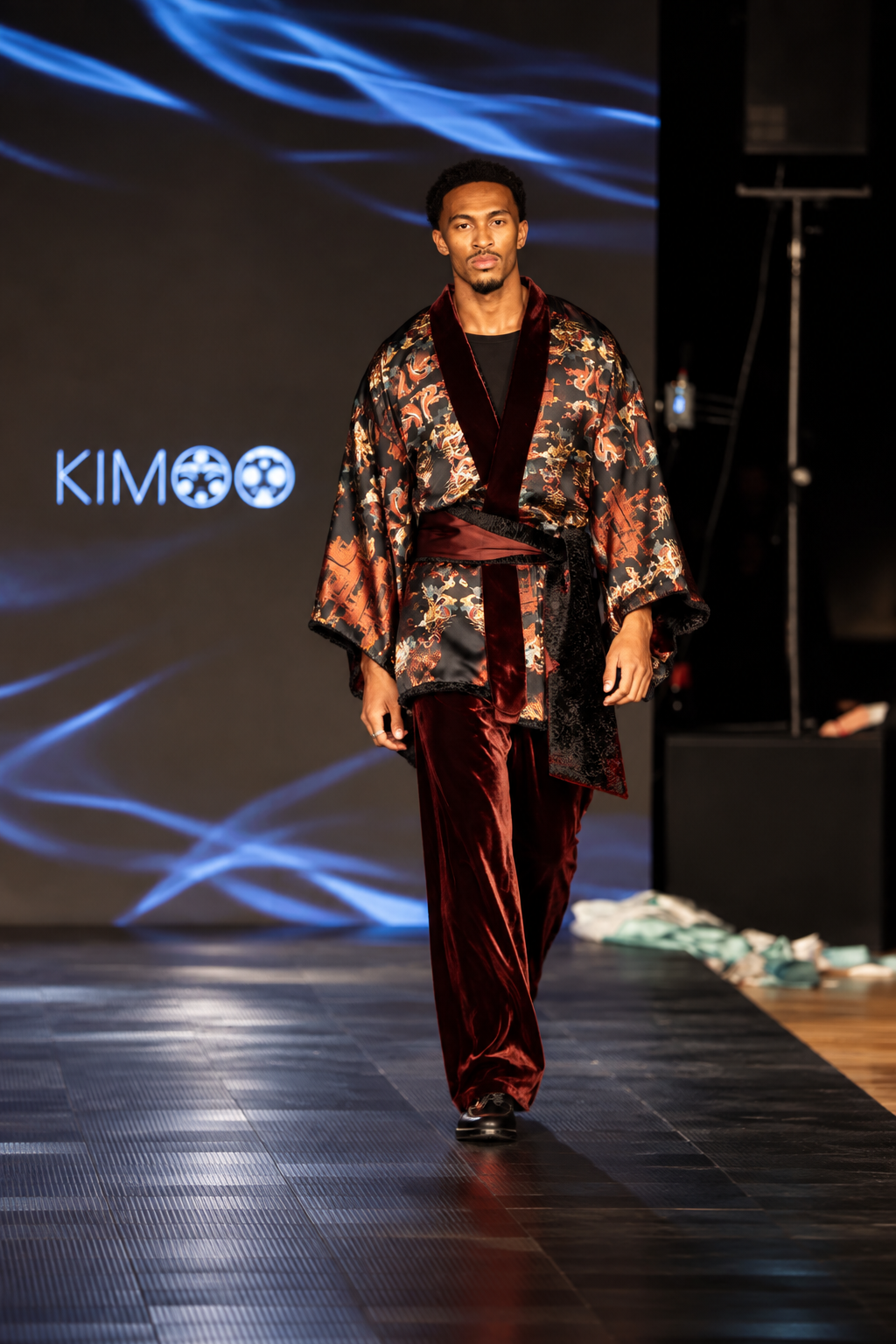
Despite the name, KIMOONCHO does not intend to remain within the boundaries of the kimono. Dresses, trousers, jackets, coats, eveningwear and qipao-inspired designs already broaden the vocabulary. The kimono is less a final destination than the first reference point.
That distinction will matter as the label develops. Its strongest proposition is not simply bringing an Eastern garment to a European runway, but exploring how different traditions can be translated into clothes that belong to the present.
In Milan, that story began with silk, embroidery and silhouettes carrying traces of several worlds at once. For KIMOONCHO, the next challenge will be making that language unmistakably its own.