
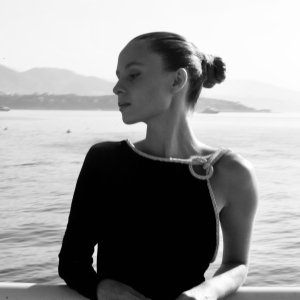
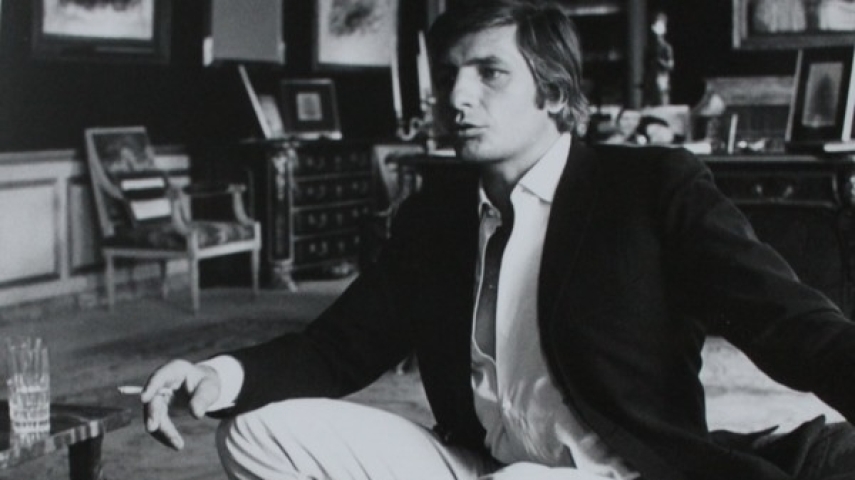
Photo credits: Gunter Sachs. Sandra’s Closet
The mid-twentieth century was populated by many who inherited the world, but few who possessed the intellect, aesthetic poise, and poetic audacity to orchestrate it. Gunter Sachs belonged to that rare, cerebral breed of visionaries who transformed the art of living into a disciplined pursuit of elegance.
Industrial Royalty and Swiss Discipline
Born Fritz Gunter Sachs on November 14, 1932, at Schloss Mainberg in Bavaria, he entered the world squarely within European industrial royalty. His maternal grandfather was Adam Opel, founder of the automotive empire, while his father, Willy Sachs, directed Fichtel & Sachs, a powerhouse in German engineering. Following his parents' early separation, young Sachs spent his formative years in Switzerland under the care of his mother, Elinor, alongside his brother, Ernst-Wilhelm.
A Playboy with a Diploma in Mathematics
Refusing the role of a passive heir, Sachs cultivated a surprisingly disciplined mind. He attended the esteemed Institut Auf dem Rosenberg in St. Gallen, qualified as a French interpreter, completed apprenticeships as a precision mechanic and a banker, and ultimately pursued mathematics and economics at the University of Lausanne. Following his father's passing in 1958, Sachs stepped dutifully into corporate governance, serving on the supervisory board of the family enterprise well into the late 1970s.
From Cresta Bobsleds to Film Festivals
Yet corporate boardrooms alone could never contain his restless intellect. Sachs forged a multi-faceted creative career that crossed disciplines with effortless charm. A devoted sports enthusiast who served as vice-president of St. Moritz’s legendary Cresta Run, he turned his lens toward documentary filmmaking. His sports documentary Die Helden (The Heroes) earned prestigious critical recognition at the San Sebastián International Film Festival.
Pop Art, Surreal Nudes, and Zodiac Statistics
By the early 1970s, Sachs had established himself as a fine-art photographer, celebrated for his surrealist landscapes and quiet nude studies, publishing seven photography volumes and launching the Galerie an der Milchstrasse in Hamburg. A discerning patron of modern art, he was a close confidant of Andy Warhol; when Warhol’s 1972 Hamburg exhibition met with slow initial sales, Sachs quietly purchased a third of the collection himself so his friend would not be disappointed. Later in life, driven by his enduring fascination with numbers, he authored The Astrology File, a landmark statistical study analyzing human behavior across zodiac signs.
Courtships and Early Heartbreak
His private life at that period of time was marked by both profound tragedy and enduring devotion. In 1956, he married his first wife, Anne-Marie Faure, with whom he had a son, Rolf Sachs - now a distinguished conceptual designer. Tragically, Anne-Marie passed away in 1958 due to a surgical anesthesia error.
The Low-Flying Botanical Bombardment
Following a period of quiet romantic discretion, Sachs encountered French screen icon Brigitte Bardot in the spring of 1966. The courtship that followed became an enduring chapter in Riviera mythology. Eschewing conventional romantic gestures, Sachs boarded a helicopter the morning after meeting her, hovered over her secluded coastal sanctuary, La Madrague in Saint-Tropez, and dropped a cascade of hundreds of red roses across her lawn before diving gracefully into the Mediterranean below.
"It's not every day a man drops a ton of roses in your backyard," Bardot later recounted in her autobiography, Initiales B.B.
The gesture carried a certain poetic inevitability; on July 14, 1966, the pair were married in an eight-minute Las Vegas ceremony. Though their marriage dissolved amicably three years later, their mutual affection evolved into a steadfast, lifelong friendship.
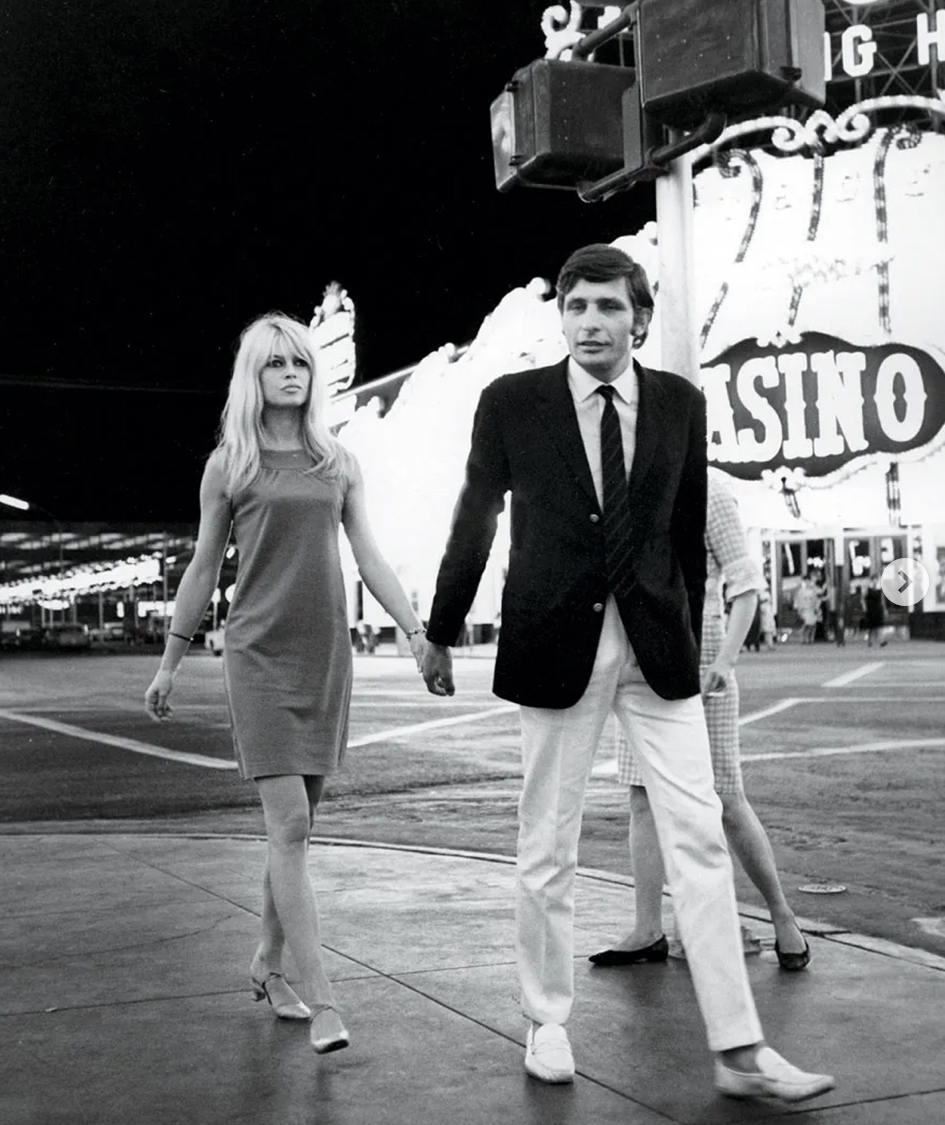
Photo credits: Vintage Las Vegas Instagram. Brigitte Bardot and Gunter Sachs, Las Vegas, 1966
In 1987, Bardot placed her personal keepsakes - including her wedding ring and high-carat jewelry gifted by Sachs - on the auction block to raise seed capital for the Fondation Brigitte Bardot. Sachs attended the sale incognito, quietly buying back the pieces to ensure her animal welfare foundation received substantial funding. However, rather than handing them back into an endless loop, Sachs held onto them, delivering one of the decade's great quips:
"She's only interested in animals. Which is why I had to twice buy my jewels... If I gave them back to her, she'd sell them, I'd buy them, she'd sell them, I'd buy them - it would be perpetual motion."
He personally funded her brand-new animal charity with millions of francs, without actually having to lose the historical pieces to strangers.
Decades of Quiet Devotion
In late 1969, Sachs married Swedish model Mirja Larsson. This third union became the quiet anchor of his remaining years, producing two sons, Christian Alexander and Claus Dirk, and enduring for more than four decades until his passing in 2011.
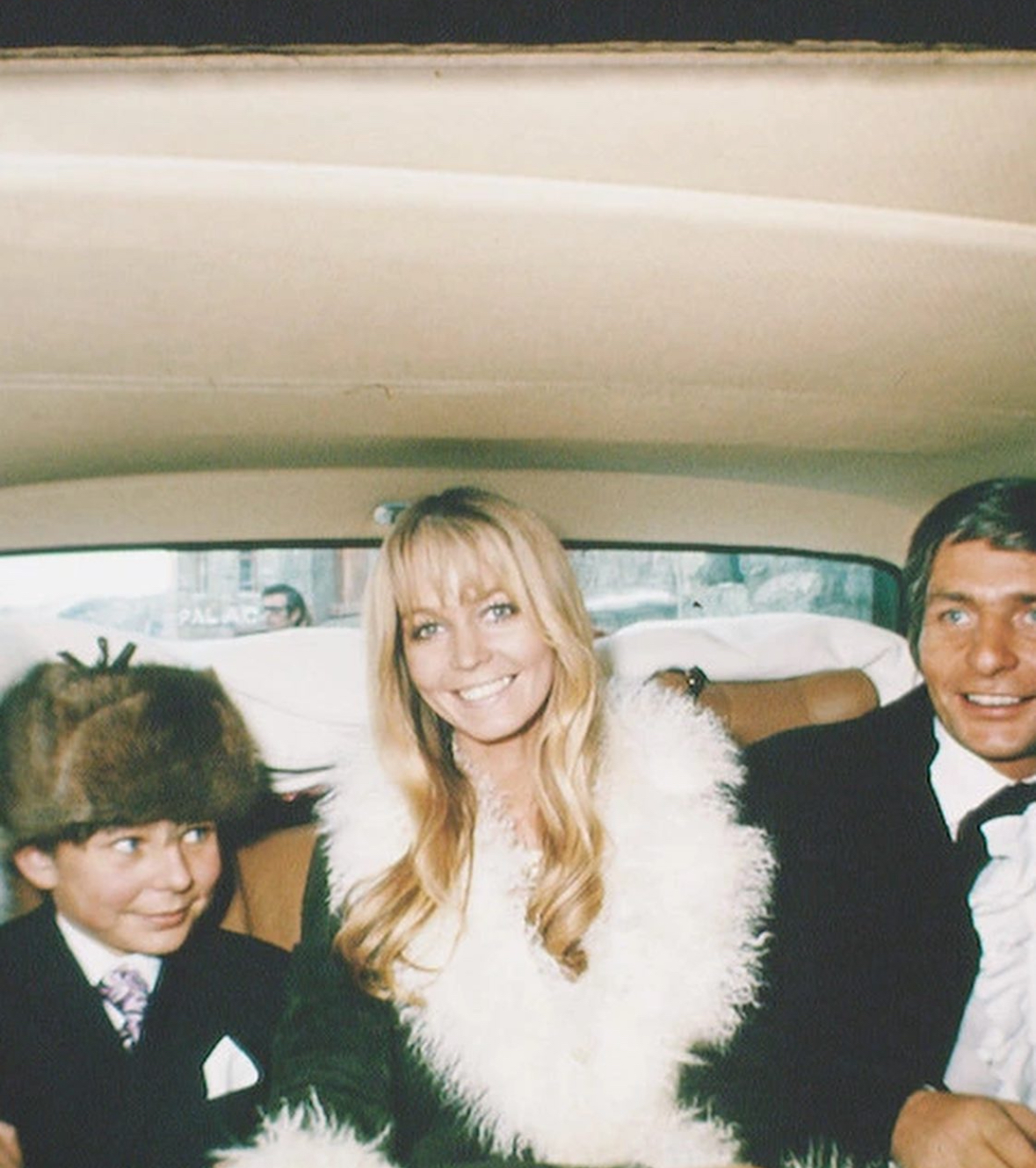
Photo credits: Gunter Sachs and Mirja Larsson. Vuguextatler Instagram
Philanthropy Beyond the Spotlight
Sachs’s commitment to humanitarian causes was quietly pursued through his family's own initiative: in 1987, he and his wife Mirja established the Mirja-Sachs Foundation, an organization dedicated specifically to providing educational and humanitarian aid to children in impoverished regions globally.
An Authored Life
Gunter Sachs moved through the world with unstudied poise, sharp intellect, and a playful sense of theater. Whether hurtling down the Cresta Run, championing avant-garde art, or engineering romantic gestures of legendary flair, he demonstrated that while fortunes can be inherited, true style, intellect, and timeless generosity must be individually authored.
Secrets of Success, Love, and Life: The Legacy of the World’s Visionaries. A recurring Monaco Voice column exploring the lives, achievements, and philosophies of the world’s most influential visionaries, uncovering the secrets behind their success and enduring legacies.