
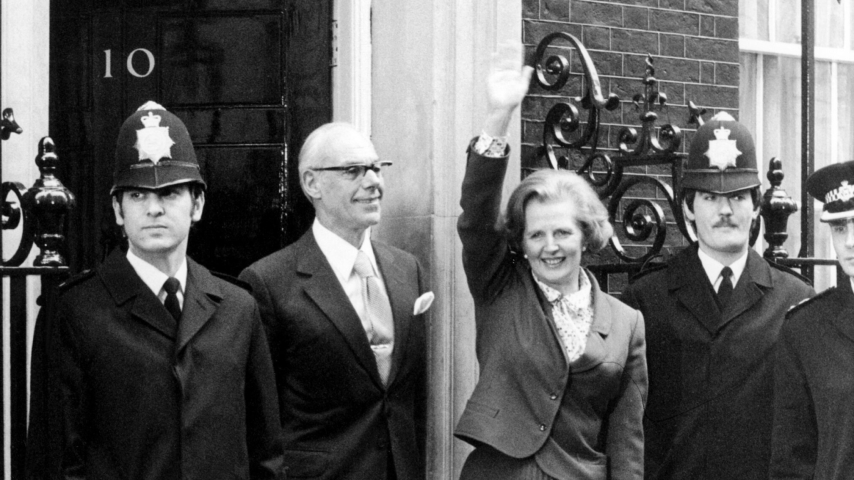
Photo credits: RadioFreeEurope. Margaret Thatcher waves as she arrives at 10 Downing Street to take office on May 4, 1979
Secrets of Success, Love, and Life: The Legacy of the World’s Visionaries. A recurring Monaco Voice column exploring the lives, achievements, and philosophies of the world’s most influential visionaries, uncovering the secrets behind their success and enduring legacies curated by actress Vladyslava Garkusha.
Margaret Hilda Thatcher, born October 13, 1925, could have remained a chemist working on industrial food science - but instead chose the far harsher chemistry of politics.
Her Parents: Alfred and Beatrice Roberts
Margaret Thatcher was born to Alfred Roberts and Beatrice Stephenson Roberts in Grantham, Lincolnshire, England, where the family lived above their grocery shop.
Alfred Roberts was a grocer, Methodist lay preacher, and local councillor, later serving as mayor of Grantham. He believed strongly in self-help, thrift, and civic duty, and regularly discussed politics at home. Beatrice Roberts was a dressmaker before marriage and a devout Methodist. Her role was domestic and religious: maintaining the household, reinforcing discipline, and ensuring regular church attendance. Both parents emphasized education, hard work, and restraint. The household was stable, modest, and disciplined rather than affectionate or indulgent.
She attended Somerville College, Oxford, where she studied chemistry and became president of the Oxford University Conservative Association. After graduating, she worked as a research chemist at J. Lyons & Co., contributing to work on emulsifiers and aeration in food production. The point is not whimsy; it is method. Thatcher was trained to optimize systems, reduce waste, and make things efficient.
Career: Ideology With a Calculator
Dissatisfied with the limits of the laboratory, Thatcher retrained as a barrister specializing in tax law. Elected to Parliament in 1959 as MP for Finchley, she advanced steadily. As Secretary of State for Education, she eliminated free school milk for children aged 7-11 in England and Wales in 1971, - earning the nickname “Thatcher the Milk Snatcher.”
In 1979, she became Britain’s first female prime minister and remained in office for eleven years, the longest-serving British leader of the 20th century. Her economic program - privatization, union suppression, reduced public spending - revived certain sectors while hollowing out others.
She once said: “Economics are the method; the object is to change the heart and soul.”
Power, War, and Removal
The Falklands War in 1982 was a short but pivotal conflict with Argentina over the South Atlantic islands. Thatcher’s decision to send a naval task force restored national confidence after years of economic struggle and cemented her reputation for iron resolve. Internationally, she forged a close relationship with U.S. President Ronald Reagan, aligning on economic liberalization, anti-communism, and military strength - a partnership that defined Western conservatism in the 1980s.
At the same time, Thatcher’s skepticism toward deeper European integration put her increasingly at odds with both European leaders and factions within her own Conservative Party. By 1990, after a series of political missteps and party rebellions, she was forced to resign.
Love and Marriage: Denis Thatcher
Margaret met Denis Thatcher in 1949 at a Conservative Party dinner in Dartford, where she was a parliamentary candidate and he was a successful businessman. What existed was mutual recognition: ambition meeting stability.
Denis was divorced, nine years older, and already embedded in the business world. He admired Margaret’s intelligence and drive, and - crucially - was unthreatened by it. That alone made him unusual for the time.
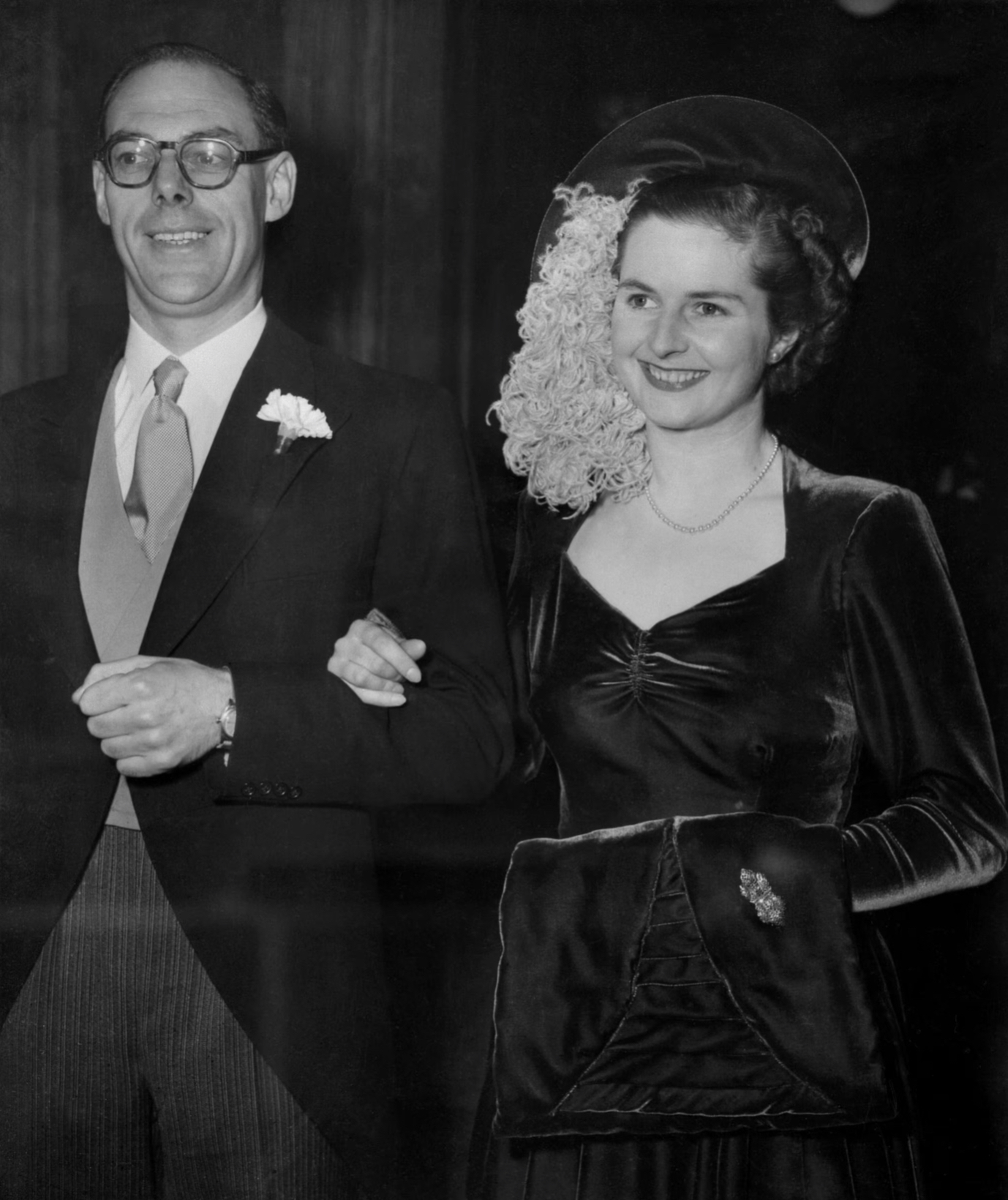
Photo credits: RadioFreeEurope. Margaret Thatcher and Denis Thatcher
They married in 1951, two years after meeting. Denis supported her decision to retrain as a barrister and later to pursue national politics. He avoided public visibility and rarely interfered. Margaret later acknowledged: “I could never have been Prime Minister for more than 11 years without Denis by my side”.
They had twins, Mark and Carol, in 1953. Thatcher returned to political work quickly, balancing motherhood with relentless professional ambition. She later admitted that politics exacted a personal cost, stating: “If I had my time again, I wouldn’t go into politics because of what it does to your family.”
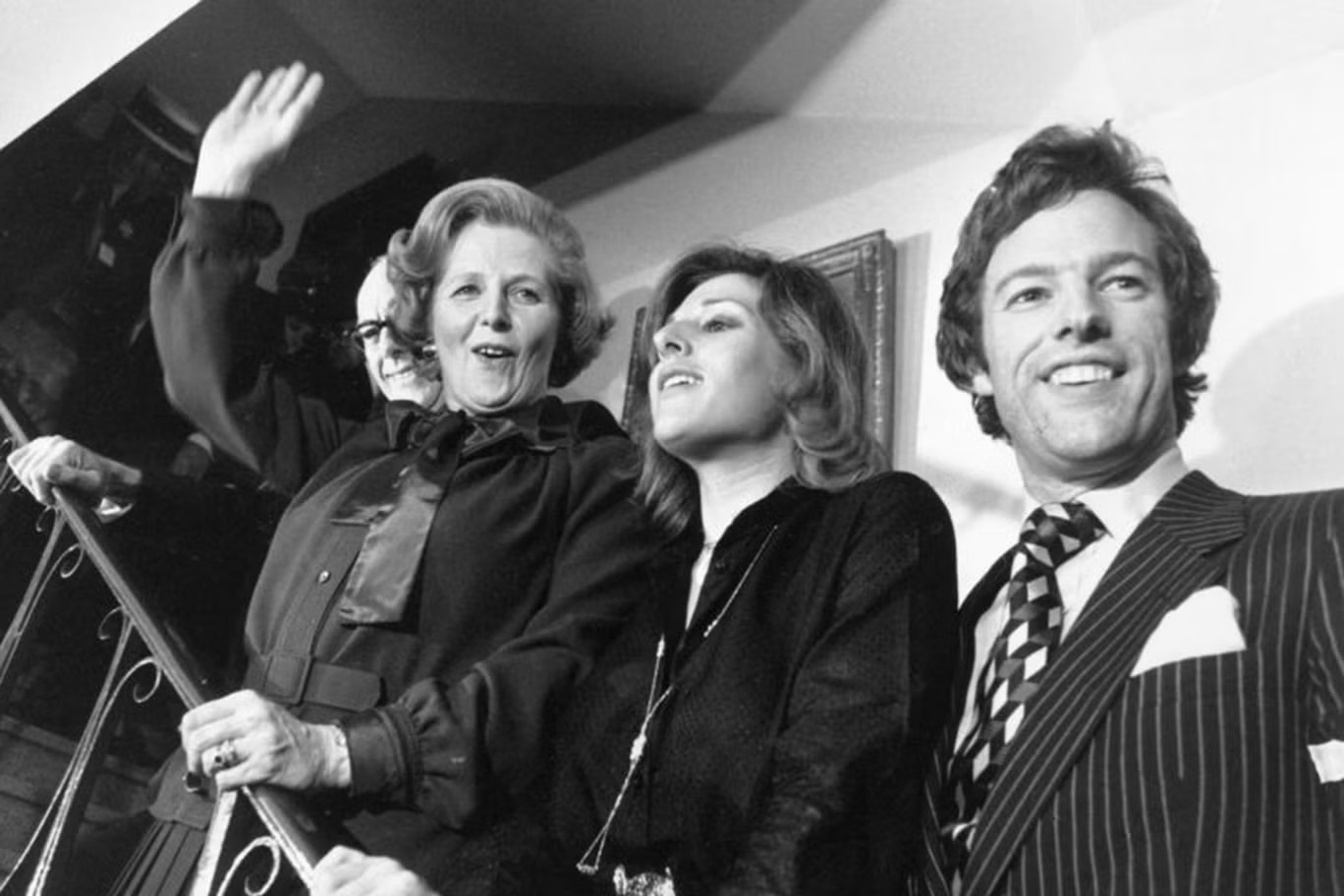
Photo credits: Margaret Thatcher, with husband Denis and twins Carol and Mark, on election night in 1979, (Getty)
Despite her public hardness, Denis’s death in 2003 affected her deeply. Friends and biographers noted that her health declined noticeably afterward.
Legacy
Margaret Thatcher died in 2013 at 87. During her time as prime minister - Britain changed markedly. Her governments privatized major state industries, introduced laws that curtailed trade union power, and brought inflation down from the peaks of the late 1970s. The era also saw significant manufacturing job losses and lasting economic changes in many industrial regions.
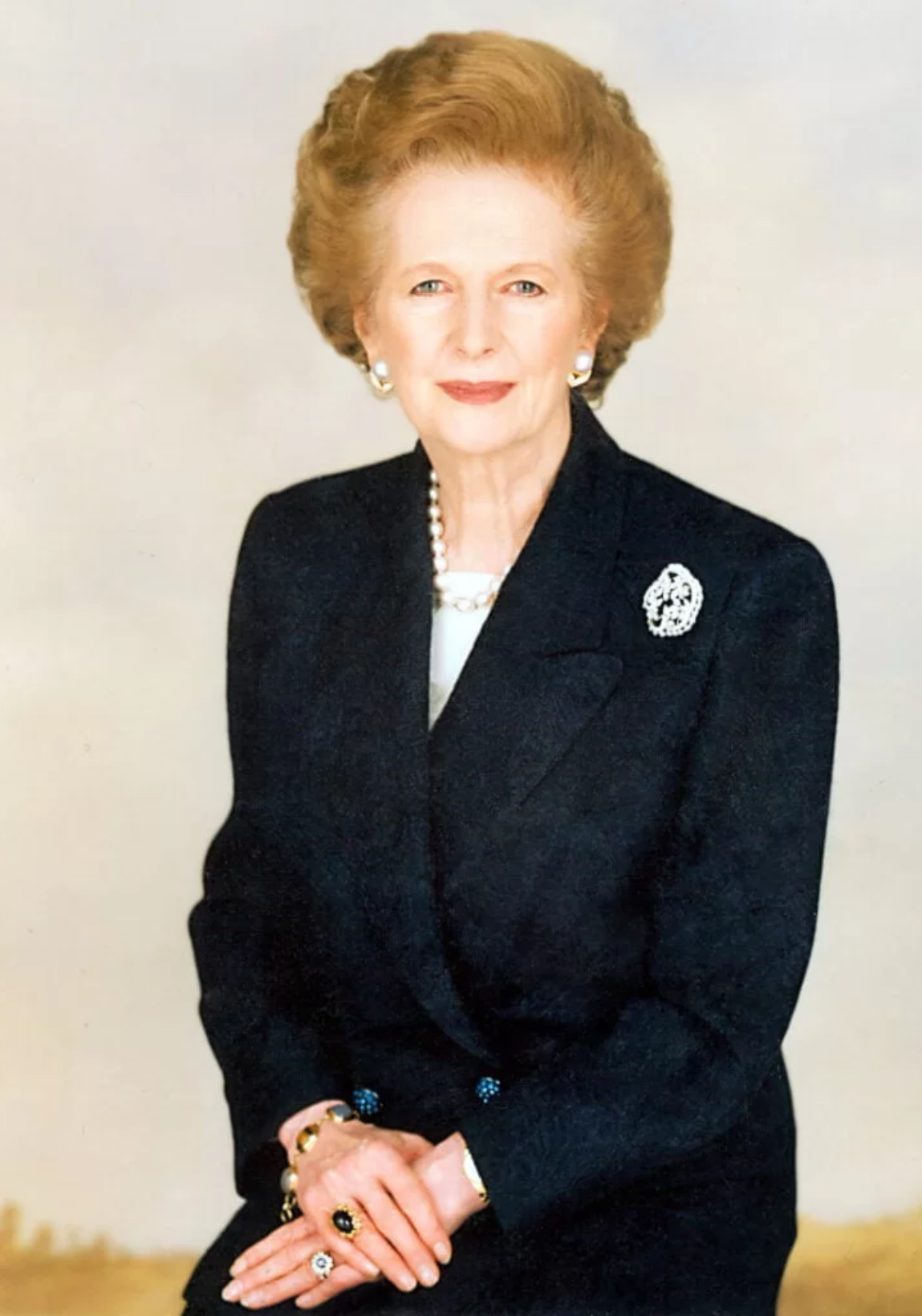
Photo credits: Museum of The Prime Minister
“Plan your work for today and every day, then work your plan.” Discipline was central to both politics and life: “Look at a day when you are supremely satisfied at the end. It's not a day when you lounge around doing nothing; it's a day you've had everything to do and you've done it. Disciplining yourself to do what you know is right and important, although difficult, is the highroad to pride, self-esteem, and personal satisfaction.”