
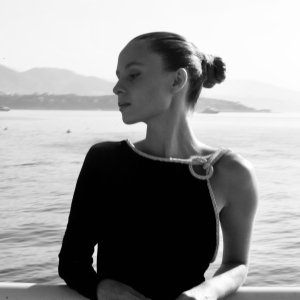

Photo credit: Hedy Lamarr. Wikipedia
In the smoke-filled offices of 1940s Metro-Goldwyn-Mayer, Louis B. Mayer sat on a goldmine he didn't quite understand. He had Hedy Lamarr, a woman whose face was so singularly perfect that The New York Times actually complained she was "a distraction to the audience". MGM spent their days obsessing over her lighting and dressing her up as the "Exotic Other," but Hedy was busy with her other hobby: re-engineering the world in her head.
The Education of a Polymath
Before she was an MGM asset, she was Hedwig Eva Maria Kiesler, born in 1914 to a prosperous secular Jewish family in Vienna. Her education was a sophisticated blend of formal European finishing and a private, informal apprenticeship in engineering. She was educated by private tutors, becoming fluent in several languages and excelling in mathematics.
Her father, Emil Kiesler, a bank director with a deep fascination for technology, provided the mechanical influence that would define her later life. He didn't just buy her toys; he explained how the world worked. Hedy later recalled that he would take her on long walks to explain the physics of the city's infrastructure. This unconventional upbringing for a young girl in the 1910s bore fruit early; by age five, she was known for taking apart her music boxes and successfully reassembling them - a precursor to the drafting table she would later keep in her Hollywood trailer.
From Schoolgirl to "Ecstasy"
Hedy did not just "fall" into acting; she pursued it as a form of rebellion against her sheltered life. At age 16, she forged a note from her mother to skip school and went to SASCHA Film Studios in Vienna to seek work. She eventually enrolled in the prestigious acting school of Max Reinhardt in Berlin. Reinhardt, a legendary figure in theater, famously called her "the most beautiful woman in Europe," though he was equally impressed by her stage presence and intellectual spark.
She was noticed for her "screen magnetism" almost immediately. After a few minor roles, she was cast in the 1933 Czech film Ecstasy. The film made her an overnight international sensation and a focus of scandal - not for her dialogue, but for a scene where she appeared nude and another where her face was filmed in a close-up that expressed passion.
The Gilded Cage
Shortly after Ecstasy, she met Friedrich Mandl, an Austrian arms tycoon and the third-richest man in Austria. He was so captivated by her that he spent a fortune attempting to buy every copy of Ecstasy in existence to prevent others from seeing her. Their marriage (1933–1937) was a study in control. Mandl forced her to give up acting and kept her in his castle, Schloss Schwarzenau. Hedy would later describe this period with chilling precision:
“I was like a thing, some object of art which had to be guarded - and imprisoned - having no mind, no life of its own.”
However, this "gilded cage" became an unintentional classroom. Mandl insisted she attend his business dinners with Nazi and Italian fascist officials, assuming his beautiful wife was merely part of the decor. He was wrong. Hedy sat in silence, absorbing high-level technical discussions about radio-controlled torpedoes and anti-jamming technology. While Mandl thought he was showing off an "object of art," Hedy was secretly taking a masterclass in military engineering, memorizing the technical flaws in guidance systems that she would solve years later.
The Escape to Hollywood
By 1937, the political climate in Austria was darkening and Mandl’s possessiveness had become unbearable. Realizing she was a "virtual prisoner," Hedy orchestrated a daring escape. In a plot that mirrored a movie script, she reportedly drugged the maid assigned to watch her, dressed in the maid’s uniform, and escaped through a service window in the middle of the night.
She fled to London, where she used her jewelry to buy a ticket on the SS Normandie - the same ship carrying MGM mogul Louis B. Mayer. By the time the ship docked in New York, a formal partnership was solidified, launching her career with a $500-a-week contract and a new name: Hedy Lamarr.
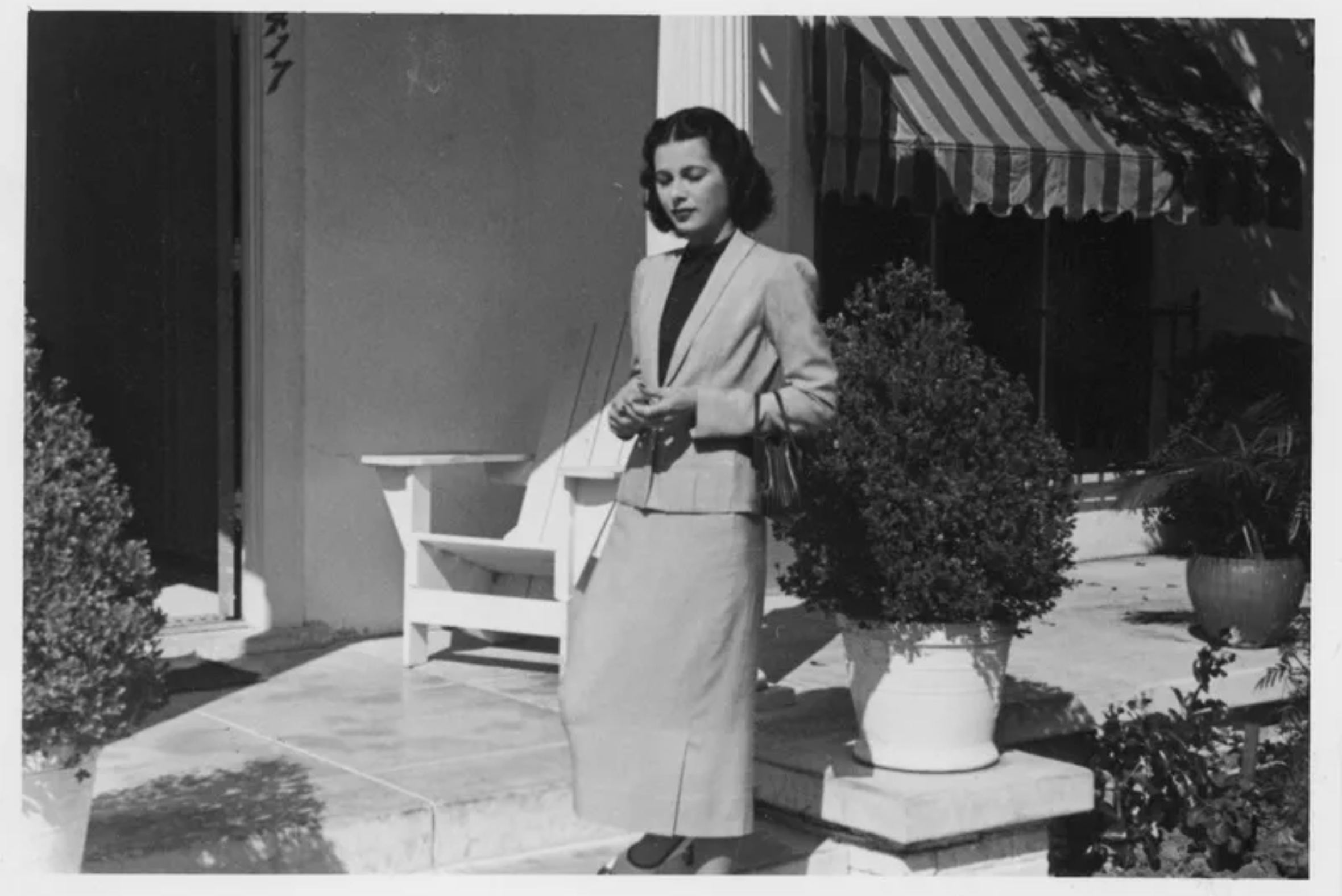
Photo credit: Hedy Lamarr, 1940. (Harry S. Truman Library, National Archives)
The Symphony of 88 Frequencies
In Hollywood, Hedy’s career was a paradoxical mix of superstardom and intellectual frustration. Her trailer was famously equipped with an inventing table where she worked on everything from improved traffic lights to a bouillon cube that turned water into a carbonated drink. "I don't have to work on my ideas," she noted, "they come naturally."
When the war broke out, she teamed up with avant-garde composer George Antheil to solve a lethal problem: the Axis was jamming the radio signals used to guide Allied torpedoes. Drawing on her memories of Mandl’s dinner parties and Antheil’s experience with player pianos, they developed frequency hopping. By jumping the signal across 88 different frequencies, they created a communication system that was impossible to intercept. On August 11, 1942, they were granted Patent No. 2,292,387. The Navy, unimpressed by a movie star’s blueprints, suggested she sell kisses for war bonds instead. She raised $25 million in one night, but her patent was classified and shelved until the 1960s.
The Six Unions
Lamarr’s interpersonal history was less a series of romances and more an iterative search for a peer - a journey that began with her escape from the stifling control of Friedrich Mandl. Having fled a world where she was treated as a silent ornament, her subsequent unions were attempts to find a genuine equal.
1939, she married the prominent Hollywood screenwriter Gene Markey. While the union was an attempt at belonging, Hedy famously noted, "He was very nice, but we had nothing in common." During her marriage with Gene Markey, she adopted her first son, James.
This was followed by her marriage to English actor John Loder in 1943. She gave birth to two biological children: a daughter, Denise, and a son, Anthony.
Her later years saw a series of shorter connections: a brief marriage to Swiss entrepreneur Ernest "Teddy" Stauffer in 1951, and a seven-year marriage to Texas oil tycoon W. Howard Lee starting in 1953. In a gesture of pragmatic irony, her final marriage in 1963 was to Lewis J. Boies, the attorney who had handled her previous divorce. When this too concluded, Hedy opted for a self-imposed solitude, living the remaining thirty-five years of her life unmarried.
The Secret of Success
In her later years, Hedy withdrew into a quiet life in Florida. When the Electronic Frontier Foundation finally called her in 1997 to tell her she was being honored for inventing the basis of Wi-Fi and Bluetooth, she said: "It's about time."
Hedy Lamarr’s legacy is the refusal to be an "either/or." She proved that one can be a refugee and a pioneer, a screen siren and a scientist. She lived by a philosophy she often shared: "Any girl can be glamorous. All she has to do is stand still and look stupid." Hedy never stood still, and she was never, ever stupid.
Secrets of Success, Love, and Life: The Legacy of the World’s Visionaries. A recurring Monaco Voice column exploring the lives, achievements, and philosophies of the world’s most influential visionaries, uncovering the secrets behind their success and enduring legacies.