

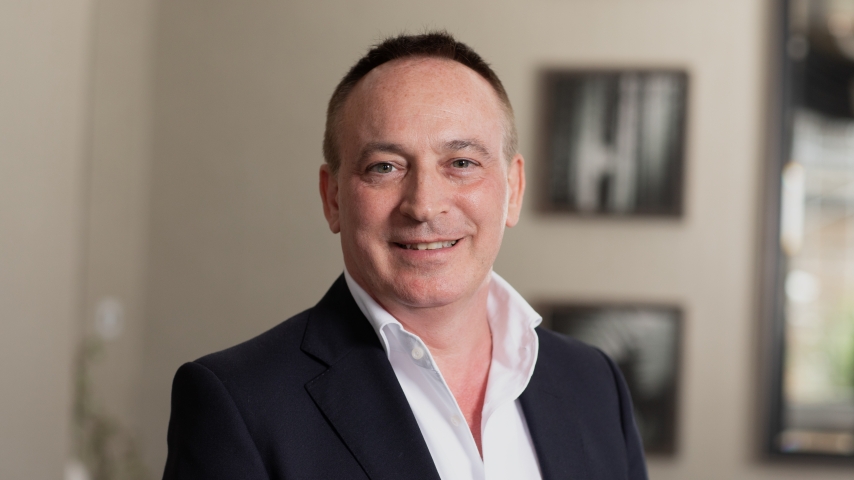
Photo credit: Rob Anderman
SERIAL entrepreneur Jonathan Jay expects many nods of agreement from the well-heeled citizens of Monaco when he says it’s easy to move from millionaire to billionaire status.
But it took a pivotal moment in the principality to start him on that path. He told Monaco Voice: “I was here in January 2007, standing outside a shop, waiting for my girlfriend and weighing a life-changing decision to sell my then business, while watching other people relaxing and chatting over their coffee and wine.
“And I'm thinking ‘why have I got all this stress in my life?’ but it put me on course to where I am now, growing, developing, buying and selling businesses and mentoring others via my Dealmakers’ Academy on how they can transition from millionaire to billionaire.
“In business, I learned it’s not about hiring more people or running more Facebook ads or developing a Tiktok trend but buying other businesses.
“Entrepreneurs like me make our first million just through sheer bloody hard work, but you get to a point where you can't work any longer hours. It's just not physically or mentally possible. As you age, you don't want it either.
“So, I tell my clients to remember those early days, when it was all about addition: adding another customer, another member of staff, a new product or service and so on to the point where you can’t add any more.
“How do you then multiply this up? By taking on someone else's hard work in building up a business over, say 20 years. Having bought that business and maybe tweaked or stabilised it, go and buy another.
“It's a snowball effect, especially as your commercial platform gets bigger and grows its acquisition power, but it's a growth strategy that many people with smaller businesses don't understand, because they think it’s about working longer hours, burning the candle at both ends.
“But it’s usually bosses who work the longest hours who earn the least pro rata, while those who think strategically earn the big wins - and that’s why they're billionaires.
“They build empires via acquisition, and then maybe crystallise its value by selling it. And if you're selling a very large business, you get a very large amount of money because you're probably floating it or selling to a buyer who's on the stock market - and that's where the big money is.
“Fact is, a few million doesn't make any difference one way or the other when you reach a certain wealth level – but hundreds of millions is a whole new deal.”
However, he warns would-be multi-millionaires or billionaires must ‘train’ and even take hard knocks to get the results:
“If you went and did an Iron Man or triathlon without training, you’d probably fail, but if you build up, do the 5k run, the 10k run, the half marathon, the marathon, you will get there. Don’t get stuck on the 5k run though and trudge along on that for life.
“In business, there's always a level above, so find out about it and become comfortable with it by spending time with people already operating there, which is why I've created the Dealmakers community. Its members spend time with those on the levels above.
“Think of it as an exponential curve or the classic ‘hockey stick’ growth chart; you start off with low curve of the blade before rapidly climbing the handle.
“I remember being in a financial bind in 1998. I knew £10,000 pounds would change my business life but just couldn't figure out how to raise it. What I should have done but didn't know it then, was found someone else doing it and just copied what they did. Nearly 30 years on, my £10k thinking's grown 1000-fold.”
Would he stop mentoring other entrepreneurs though, and pitch himself back into the challenge of high end business or even take on running and building up a football club - as Hollywood star Ryan Reynolds has done with the once-ailing Wrexham football club?
“Well, Wrexham’s finances are the business of Ryan Reynolds and his associates but a football club or, indeed, any sporting club would be my idea of how to lose money fast.
“And I decided to ‘retire’ - or throttle back - at 50. Yes, I’m tempted from time to time by attractive propositions, because there's no shortage, especially as retirement is the No1 reason people sell a business - and bosses won’t stop retiring.”
Jonathan Jay sold his first business in 1999 and made more money in one day than he did in the two and a half years running the operation, and it opened his eyes to the opportunities of buying and selling businesses. Since then, he has bought and sold some 70 companies.
Growing up in Essex, he had no urge to go into business - both his parents were teachers - and opted for a French degree at the University of London, but dropped and started a succession of ventures, including a talent agency and a magazine publishing firm.
When he later bought a struggling digital marketing business for £1 and sold it less than a year later for £1.25 million, that dream of a less stressful life that first came to mind in Monaco, crystallised around his Dealmakers mentoring scheme.
Since then, thousands of aspiring entrepreneurs have taken part, many going on to acquire multiple businesses.
Jonathan Jay is hosting 120 clients for a four-day five-star Dealmaker’s Academy event (May 5-8) in Puerto Banus, Marbella.