

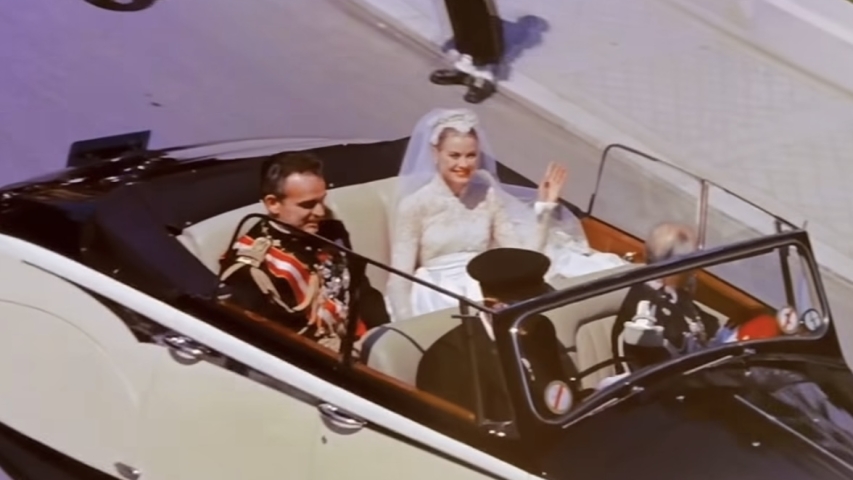
In high fashion and royal history, few garments carry the enduring resonance of the wedding gown worn by Princess Grace of Monaco. Featured as a centerpiece of the exhibition "Mariage du siècle. Monaco, 12-19 avril 1956", the gown remains a masterwork of mid-century couture and a symbol of historic glamour.
Gifted by MGM Studios and designed by costume master Helen Rose, the original ensemble was constructed in four intricate, removable parts: a lace bodice crafted from Brussels point lace, a silk taffeta overskirt, a lace train, and a waist-accentuating sash. The historic lace incorporated into the garment is believed to have been over a century old at the time of the wedding.
To complete the look, Princess Grace wore a veil trimmed with fine pearls and delicate lace attached to a "Juliet" cap, held a silk-and-lace covered missal, and carried a lucky handkerchief loaned by her sister, Lizanne. Her silk and lace pumps, designed by David Evins, honored Irish tradition by concealing a lucky copper penny inside the right shoe.
Following the April 1956 nuptials, Princess Grace presented her gown as a gift to her birthplace, the Philadelphia Museum of Art. Beginning on June 4, 1956, the gown was displayed under natural lighting, an exposure that caused gradual degradation over time. Because of its structural fragility, the original masterpiece is no longer able to travel.
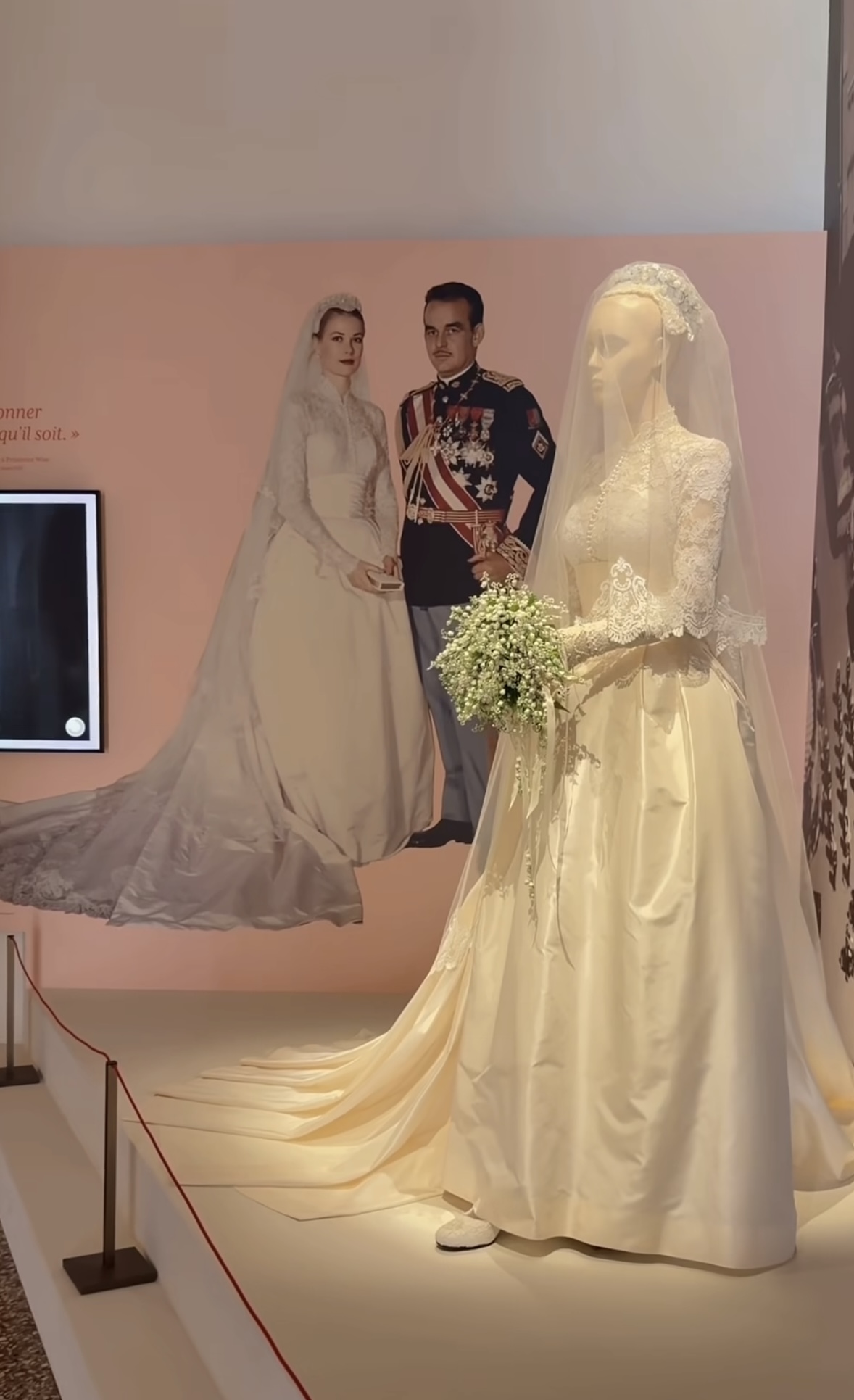
To preserve the tactile legacy of the landmark wedding, Palace artisans undertook a precise reproduction effort between 2007 and 2008. Under the direction of Maryel Girardin, tailor Jean-Claude Occhipinti meticulously recreated the gown. Faithful to the original in every detail, the undertaking required over 370 hours of artisan labor, 10 meters of silk taffeta, and thousands of hand-sewn pearls.
Through this dedicated craftsmanship, the historic gown endures not merely as a museum relic, but as an active testament to the intersection of Hollywood elegance and European royal tradition.
Photo Credits: Michaël Alesi / Palais princier