
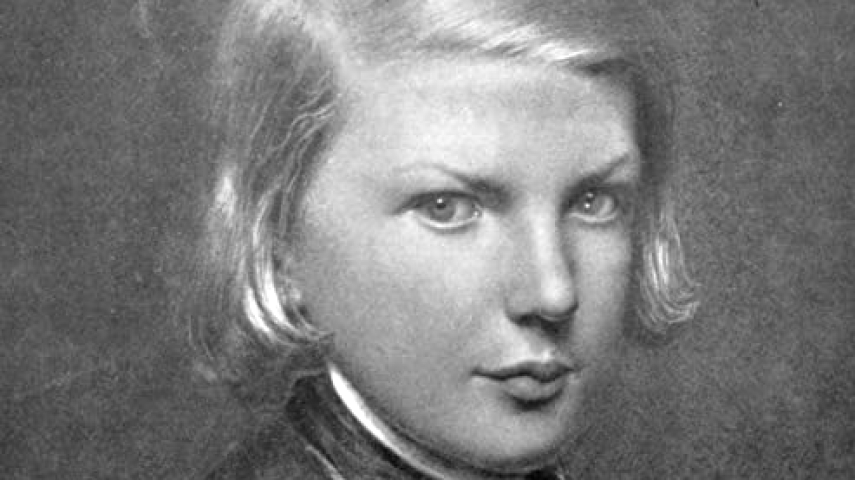
Photo credit: Litteraturefrancaise. Victor Hugo
Born on February 26, 1802, in Besançon, Hugo was the third son of Joseph Léopold Sigisbert Hugo and Sophie Trébuchet. His parents held opposing ideological alignments: his father was a general in the French Revolutionary and Napoleonic armies, while his mother was a conservative Catholic royalist. Due to his father's military postings, Hugo’s early childhood involved residences in Elba, Naples, Madrid, and Paris. Hugo completed his preparatory studies at the Lycée Louis-le-Grand. In 1816, at the age of 14, he recorded his early ambition in his journal:
"Je veux être Chateaubriand ou rien." (I want to be Chateaubriand or nothing.)
In 1819, he co-founded the literary review Le Conservateur littéraire with his brothers Abel and Eugène. His debut poetry collection, Odes et poésies diverses, published in 1822, gained the attention of King Louis XVIII, who granted Hugo a lifetime royal pension of 1,200 francs per year, providing financial independence.
This structural stability permitted Hugo to establish his domestic life. On October 12, 1822, he married Adèle Foucher at the Church of Saint-Sulpice in Paris, following a three-year secret courtship enforced by their families' initial objections.
To Adèle Foucher (1821): "When two souls, which have sought each other for, however long in the throng, have finally found each other... a union, fiery and pure as they themselves are... begins on earth and continues forever in heaven. This union is love, true love... a religion, which deifies the loved one, whose life comes from devotion and passion, and for which the greatest sacrifices are the sweetest delights. This is the love which you inspire in me... Your soul is made to love with the purity and passion of angels; but perhaps it can only love another angel, in which case I must tremble with apprehension."
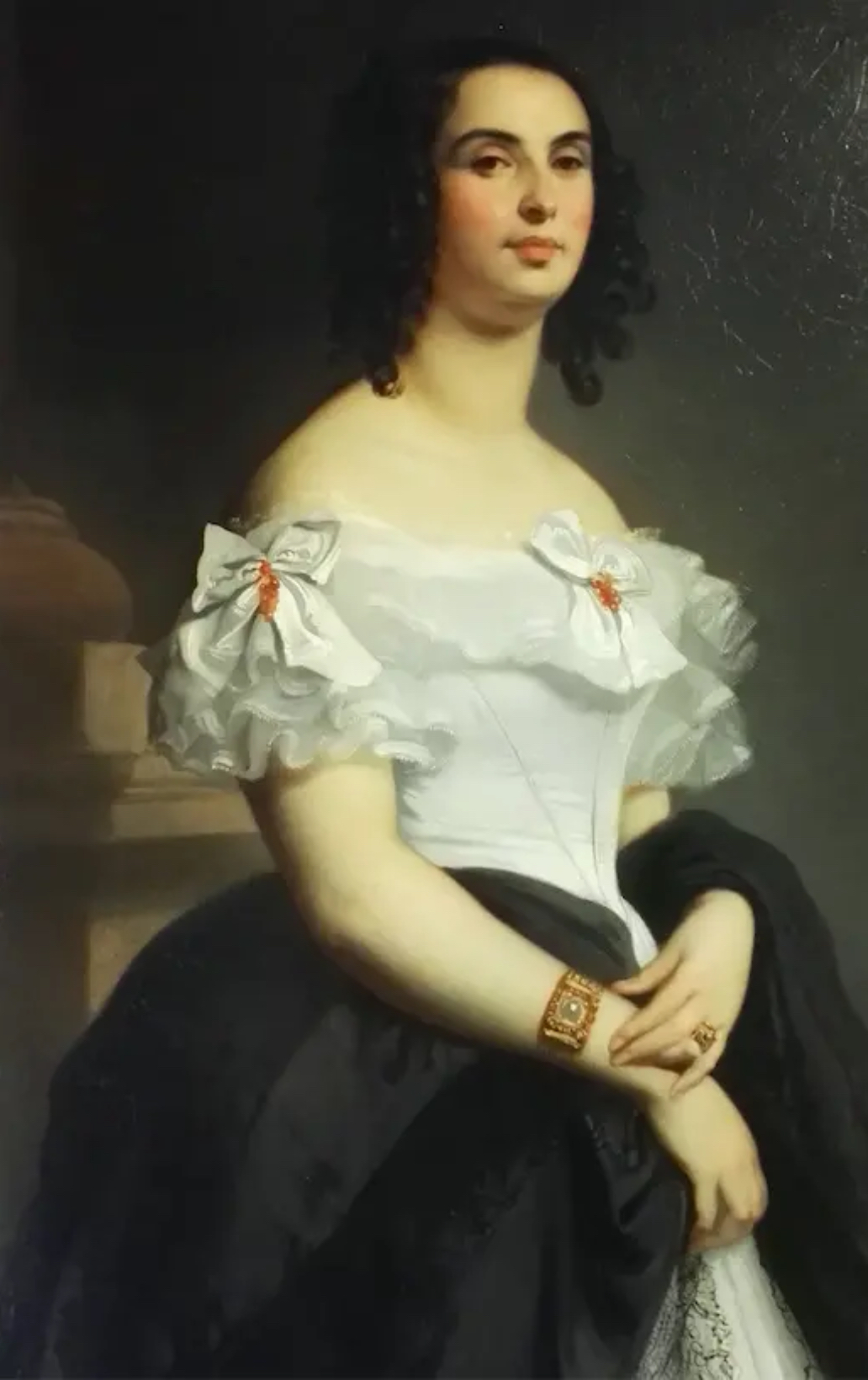
Photo credit: Plume d’histoire. Adèle Foucher
They had five children: Léopold, Léopoldine, Charles, François-Victor, and Adèle. The couple remained legally married until Foucher's death in 1868. However, in February 1833, Hugo established a parallel relationship with the actress Juliette Drouet during rehearsals for his play Lucrèce Borgia. Drouet subsequently retired from the stage and acted as his assistant, organizing his archives and transcribing his manuscripts for fifty years. Drouet moved into residences near Hugo throughout his domestic life and his subsequent years of exile.
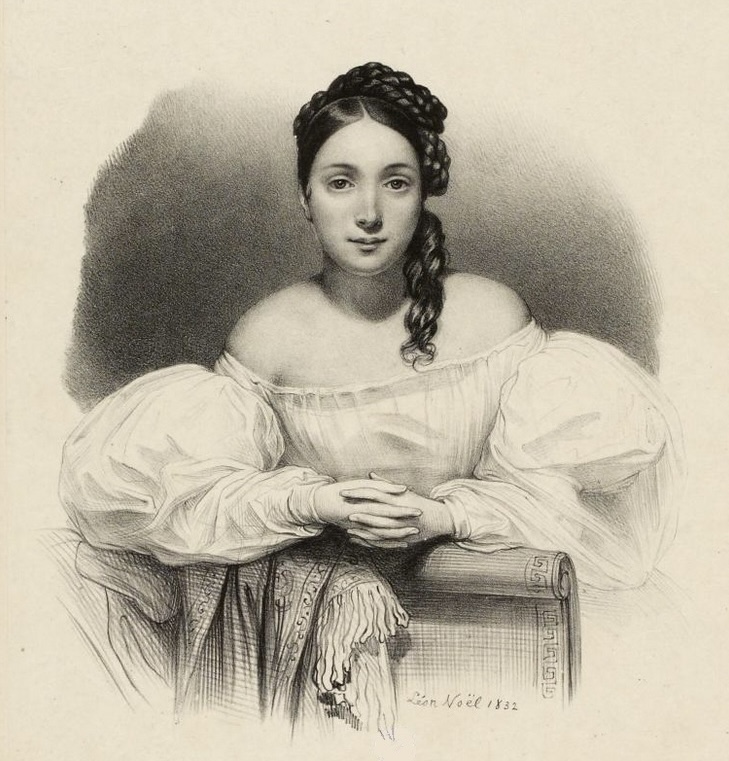
Photo credit: Wikipedia. Juliette Drouet
Hugo's literary career was marked by significant commercial successes and profound personal disruptions. In 1830, his verse drama Hernani premiered at the Théâtre-Français. The production broke classical French theatrical conventions, resulting in vocal disputes at the theater between traditionalists and romantics, a series of events now known as the "Battle of Hernani." Shortly after, his 1831 historical novel, Notre-Dame de Paris, achieved immediate commercial success. The book served a specific preservationist objective, generating public pressure that directly influenced the French government to initiate major restorations of the neglected cathedral. Amid these triumphs, personal tragedy struck: on September 4, 1843, his eldest daughter, Léopoldine, died by drowning in the Seine River at Villequier when her boat overturned. Her husband, Charles Vacquerie, also drowned. Hugo learned of the event from a newspaper report four days later while traveling in Rochefort, causing a major gap in his literary output that lasted until the early 1850s.
Hugo's political evolution ultimately led to his forced departure from France. He entered public office in 1845 when King Louis-Philippe elevated him to the peerage as a pair de France. Following the 1848 Revolution, he was elected to the National Assembly as a conservative representative, but his politics subsequently shifted toward republicanism, leading to an absolute break with Prince Louis-Napoléon Bonaparte. Following Bonaparte’s coup d'état on December 2, 1851, which established the Second French Empire, Hugo attempted to organize armed resistance and was forced to flee France under a false passport. His exile lasted nearly 19 years, spent primarily on the British crown dependencies of Jersey and Guernsey in the English Channel.
During this exile, Hugo completed Les Misérables (1862), with its publication coordinated simultaneously across major European capitals. In his preface to the novel, Hugo succinctly stated the societal conditions that drove him to write the work: "So long as there shall exist, by reason of law and custom, a social condemnation, which, in the face of civilization, artificially creates hells on earth... books like this cannot be useless."
When Emperor Napoleon III offered an amnesty to political exiles in 1859, Hugo rejected it, remaining abroad until the fall of the Second Empire.
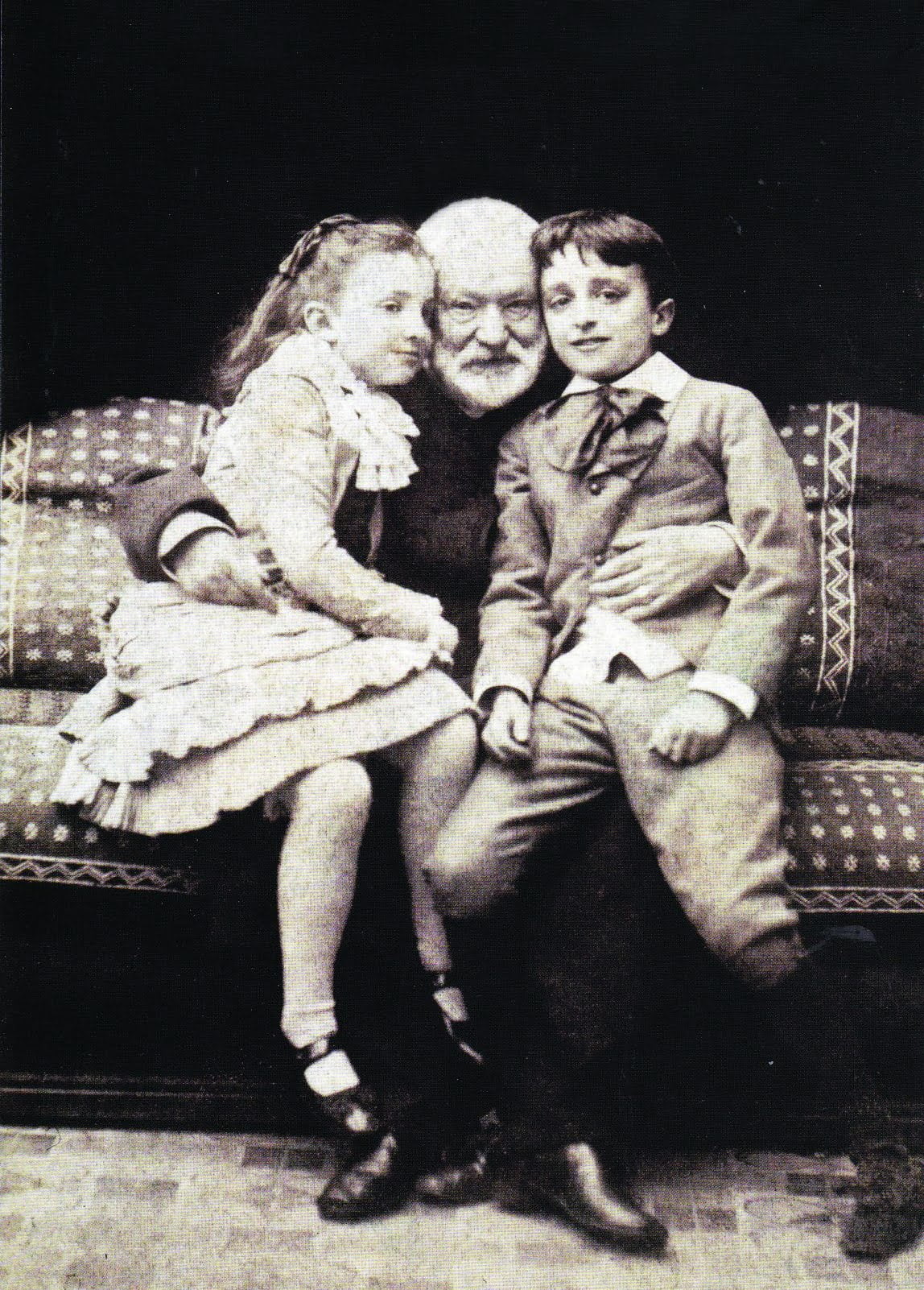
Photo credit: Litteraturefrancaise
Victor Hugo found his ultimate creative sanctuary on the British Channel Island of Guernsey, where he purchased the historic Hauteville House in Saint Peter Port in 1856. Funded entirely by the success of his poetry collection Les Contemplations, this four-story mansion became the only property Hugo ever owned, meticulously transformed by the author and his wife, Adèle Foucher, into a structural masterpiece that mirrored a metaphorical journey from darkness to light. While the lower floors were cloaked in a mysterious twilight of dark wood paneling, Flemish tapestries, and a monumental Delft-tiled fireplace, the upper levels brightened into vibrant Chinese-themed salons, culminating in a fully glazed rooftop lookout room called the Belvedere. From this sun-flooded "crystal room," Hugo stood at his desk to compose his greatest literary works, including Les Misérables, The Toilers of the Sea, and The Man Who Laughs, while gazing out at the open ocean toward the distant silhouette of France.
He captured his unyielding opposition to the regime in his collection of satirical poems, Les Châtiments (specifically in the closing lines of the poem Ultima Verba), stating his permanent stance of political resistance: "Et s'il n'en reste qu'un, je serai celui-là !" (And if there remains but one, I will be that one!)
Hugo kept his word, returning to Paris on September 5, 1870, following the declaration of the Third Republic and the capture of Napoleon III during the Franco-Prussian War. He was subsequently re-elected to the National Assembly in 1871 and became a life senator in 1876. On May 22, 1885, Hugo died of pneumonia at his residence in Paris at the age of 83. The French government decreed a state funeral; his body lay in state beneath the Arc de Triomphe before being transferred to the Panthéon for permanent interment, an event attended by an estimated two million citizens. His literary and political documents remain preserved within the Bibliothèque nationale de France as a matter of permanent historical record.
Secrets of Success, Love, and Life: The Legacy of the World’s Visionaries. A recurring Monaco Voice column exploring the lives, achievements, and philosophies of the world’s most influential visionaries, uncovering the secrets behind their success and enduring legacies.