
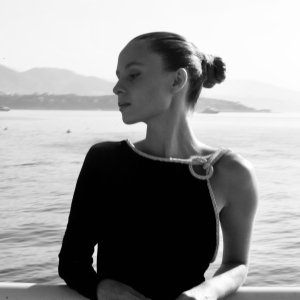
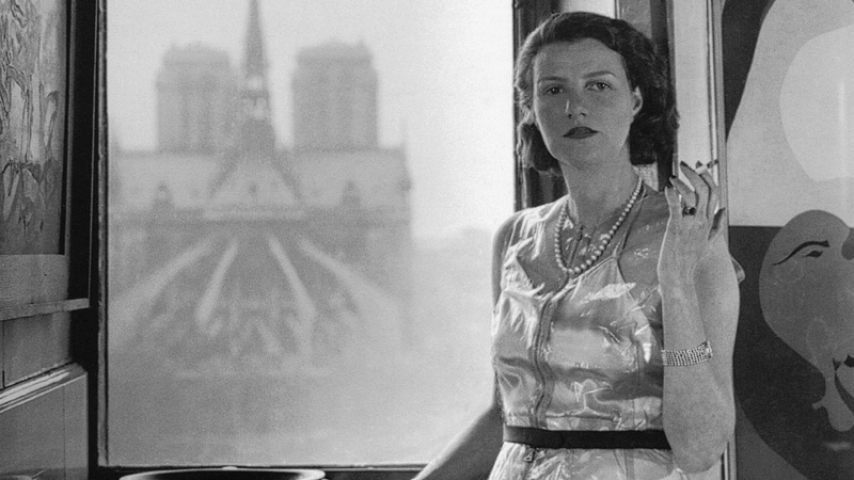
Photo credit: Peggy Guggenheim Collection. Peggy Guggenheim in Paris, photographed by Rogi André, ca. 1940
Marguerite "Peggy" Guggenheim - the woman who made the act of collecting art a high-stakes performance - was born in New York City on August 26, 1898. As the daughter of Benjamin Guggenheim and Florette Seligman, she entered the world into a family defined by the sprawling, industrial-era wealth of the American mining dynasty.
Her early years were, by her own account, a lesson in constraint. The trajectory of her life shifted violently in 1912 when her father, Benjamin, perished aboard the RMS Titanic. His refusal to board a lifeboat - famously choosing to change into his formal evening attire and face his end with a brandy and a cigar - became a cornerstone of the family lore.
She attended the Jacobi School in New York, but formal education proved far less interesting to her than the intellectual pulse of the city’s underground. In 1920, having gained access to her inheritance, she began the first of many departures from her expected social sphere, moving to Europe.
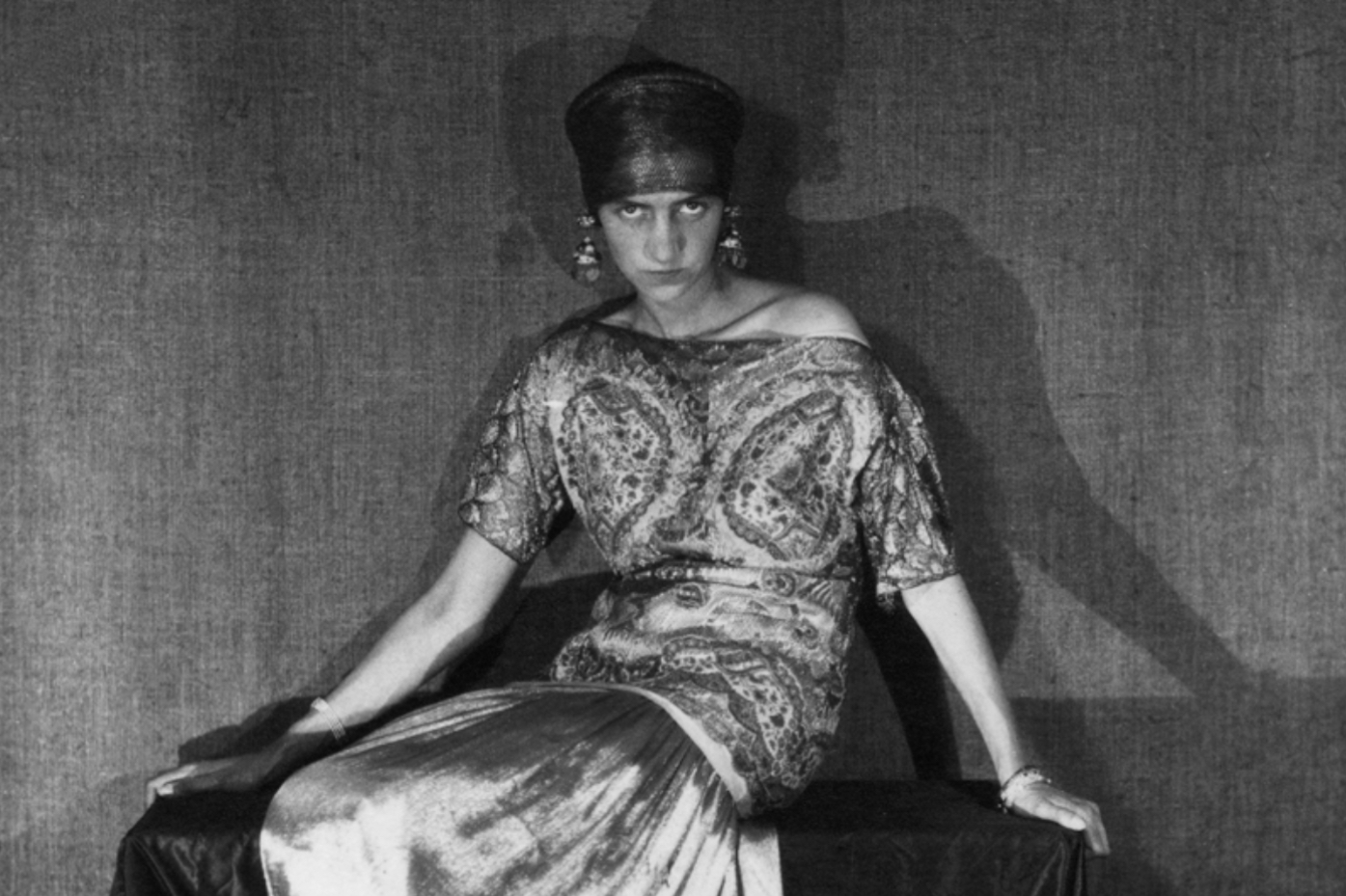
Photo credit: Peggy Guggenheim Collection. Peggy Guggenheim in a dress by Paul Poiret and a headdress by Vera Stravinsky, photographed by Man Ray, Paris, ca. 1925
Her romantic life was as restless as her professional one. She was married twice: first to the writer and artist Laurence Vail from 1922 to 1928, with whom she had two children, Sindbad and Pegeen; and later to the German Surrealist painter Max Ernst, a marriage that lasted from 1941 to 1946. When the press eventually queried her regarding the number of her husbands, her response was characteristically sharp: "My own, or other people's?"
Her professional success was essentially a triumph of survival over convention. During the Nazi occupation of Europe, while others fled, Peggy used her resources to systematically acquire art that the Third Reich deemed "degenerate." She set herself the goal to "buy a picture a day," a practice that turned her personal acquisitions into the foundation of a modern art canon. She opened Guggenheim Jeune in London in 1938 and later the Art of This Century gallery in New York in 1942, providing a critical platform for figures like Jackson Pollock and Piet Mondrian.
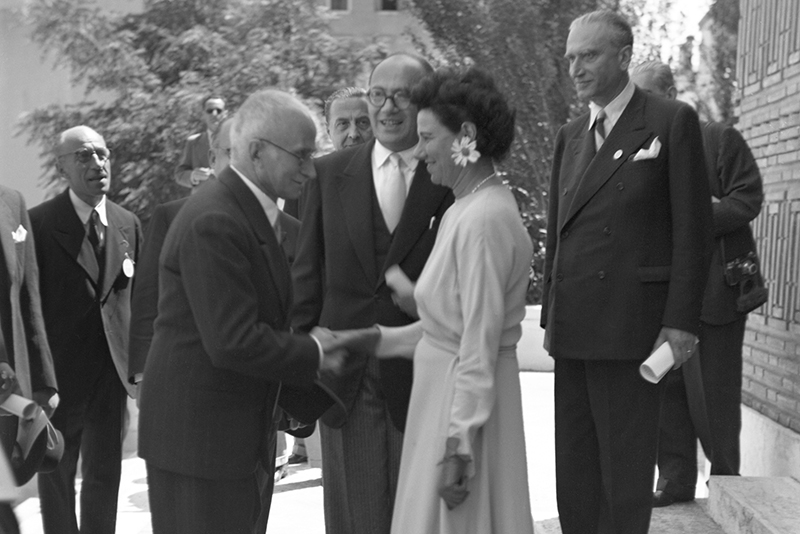
Photo credit: Peggy Guggenheim Collection. Peggy Guggenheim welcomes Luigi Einaudi, President of Italy, at the opening of her exhibition at the Venice Biennale, 1948
She would eventually settle in Venice, purchasing the Palazzo Venier dei Leoni on the Grand Canal, choosing to spend her last three decades in an unfinished eighteenth-century palace.
There is a delicious irony in the fact that the Palazzo was never finished. It stands as a low, sprawling "caesura" on the Grand Canal, a perpetual work in progress - much like Peggy herself. She lived there with her Lhasa Apso dogs, her Calder-designed headboard, and an art collection that eventually became one of the most visited sites in Venice. Of her decision to stay in the city, she famously noted: "It is always assumed that Venice is the ideal place for a honeymoon. This is a grave error. To live in Venice or even to visit it means that you fall in love with the city itself. There is nothing left over in your heart for anyone else."
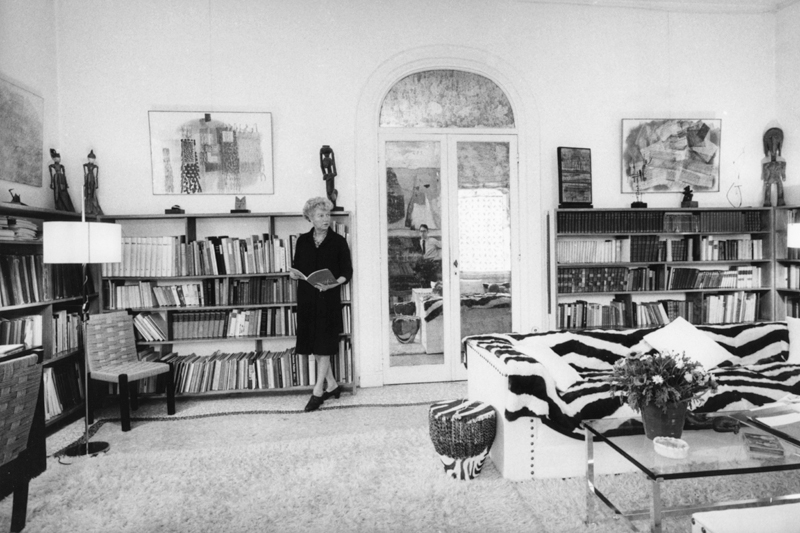
Photo credit: Peggy Guggenheim Collection. Peggy Guggenheim in the library of Palazzo Venier dei Leoni, Venice, 1960s
Peggy Guggenheim passed away in Padua on December 23, 1979. When you visit her home today, you aren't just looking at a collection of canvases; you are standing inside the mind of a woman who decided that if she couldn't fit into the world she was born into, she would simply curate a better one for herself. She didn’t seek permission, and she certainly didn't wait for approval. She simply bought the ticket, took the ride, and ensured that, long after the guests had gone home, the art remained.
Secrets of Success, Love, and Life: The Legacy of the World’s Visionaries. A recurring Monaco Voice column exploring the lives, achievements, and philosophies of the world’s most influential visionaries, uncovering the secrets behind their success and enduring legacies.